Top 5 Hiking Pains and How to Fix Them: Shin, Knee, Hip, Back, and Neck
12. července 2023
13 min read
Updated 4. 6. 2026
MF
Martina Fallerová
Movement & Wellness Expert
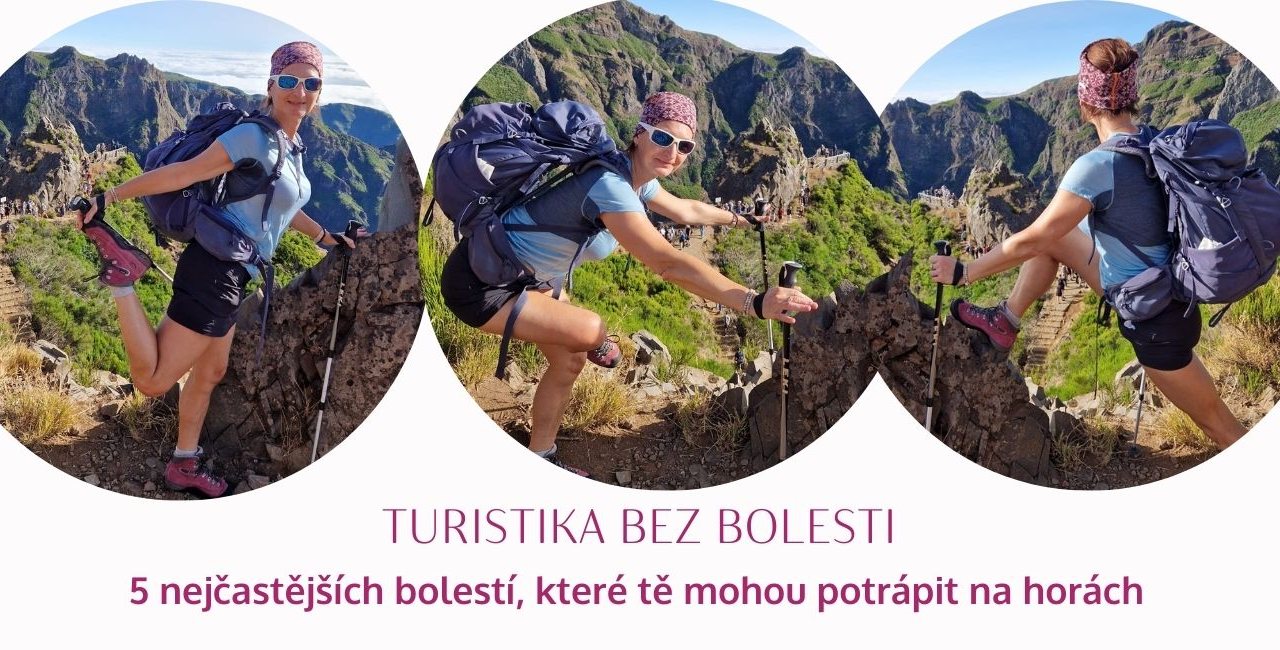
Do you love nature and hiking? Do you feel the joy of movement and want to enjoy an active vacation in the mountains? There’s nothing worse than having this passion marred by pain in your knees, lower back, hips, or neck.
If you're looking for a solution to enjoy hiking without limitations, I have some excellent tips for you from a movement specialist.
You'll discover how to prevent pain and how to enjoy the mountains to the fullest, without being restricted by discomfort and health issues. Get ready for an active vacation full of experiences, free from the fear of pain.
Let's look at the most common causes and what to avoid.
Shin Pain (Shin Splints)
From what I've seen on social media, people often call this problem "periostitis" or shin splints. It’s caused by our walking style and our choice of footwear. During the push-off phase of walking, we often fail to use the dynamic power of the foot's arch, the Achilles tendon, and the extension of the instep. Instead, we overuse the muscles that pull our toes up toward the shin.
Traditional hiking boots have rigid soles that prevent the feet from properly rolling through the step and pushing off from the toes. This means the tendons on the front of the lower leg can't lengthen; they remain constantly shortened and under tension. The weight of the boots, which these tendons have to lift with every step, only makes matters worse.
The Solution
-
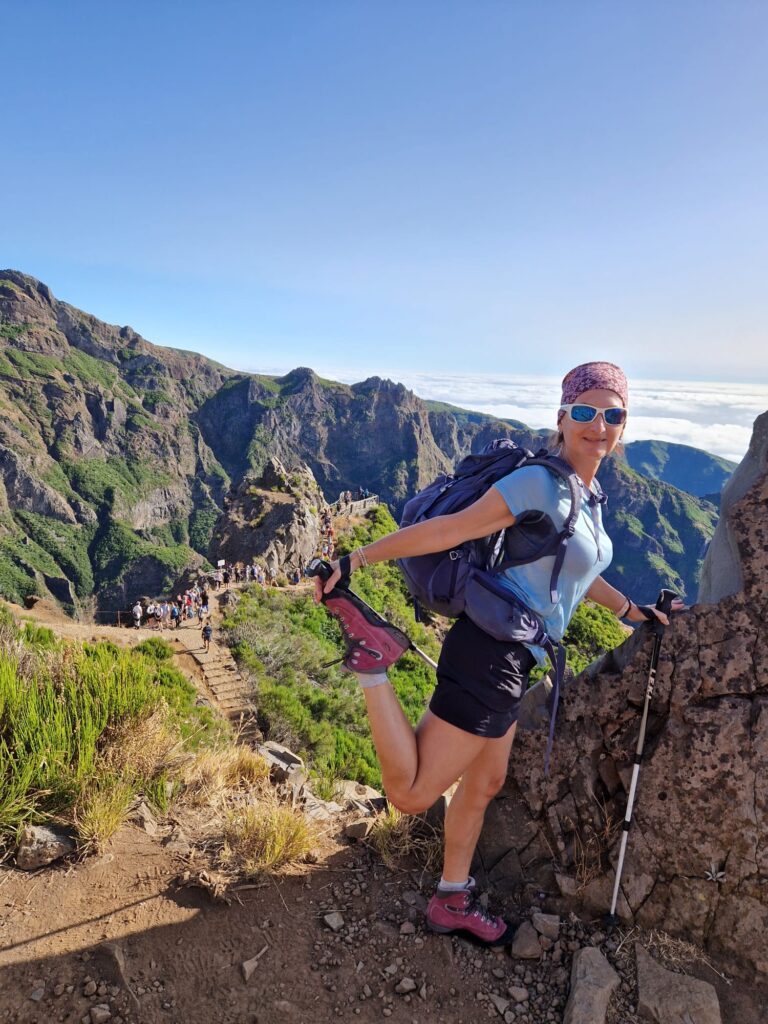
Opt for trekking shoes or trail runners instead of heavy hiking boots. They are lighter, more flexible, and allow the foot to roll naturally and the instep to stretch during push-off.
-
Sometimes, sturdy hiking boots are necessary due to the terrain or a heavy backpack. In that case, it's crucial to stretch your instep after the hike. You can also use self-massage and Rolfing techniques, which are explained in my e-book on releasing muscle tissue and hydrating fascia or in the online course RESTART YOUR BODY.
-
If you're a fan of barefoot shoes and experience this same problem, it could be due to poor walking technique or simply a greater load than your body is accustomed to.
Knee Pain
Knee pain is incredibly common. Our knees usually handle uphills much better than downhills, where many of us suffer. There are several reasons for this, so let's break them down.
Common Causes of Knee Pain
-
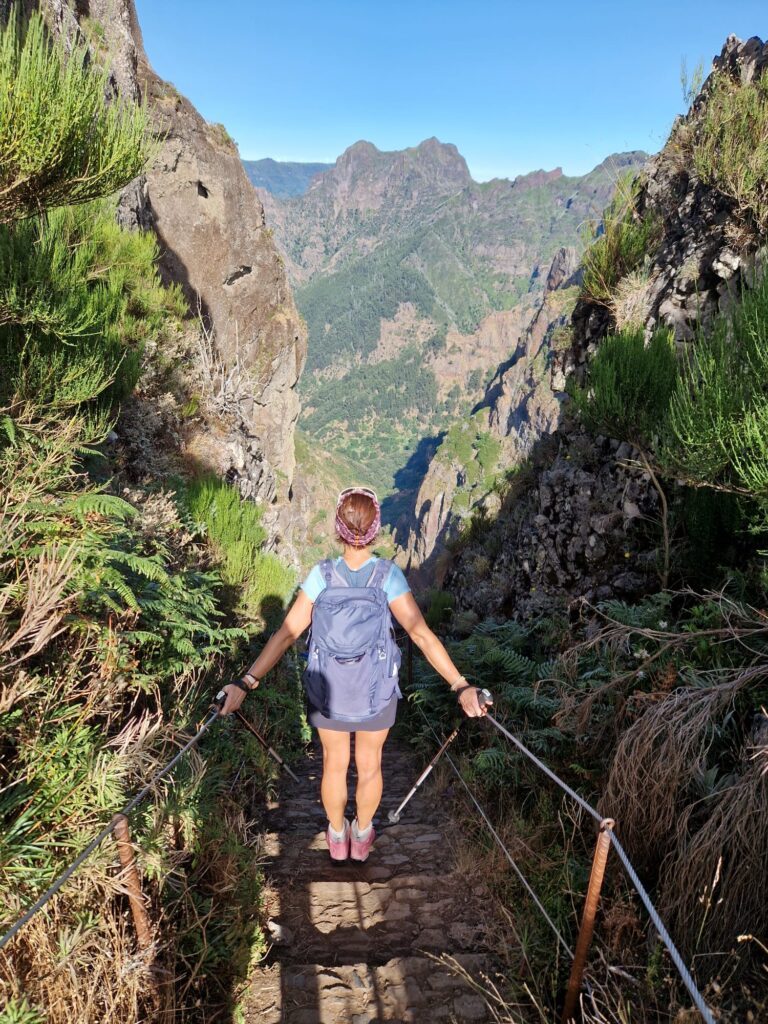
Proper alignment of the entire lower limb is crucial for correct knee function. A straight line from your 2nd toe, through the knee, to the hip joint should be maintained whether you're walking, climbing, or descending. Think of the alignment needed for ski touring (I often see people lose this alignment with less stable cross-country skis). Unfortunately, I frequently see the opposite. Some people walk with their feet turned outwards, while their knees point forward. For others, an unstable foot, ankle, or hip causes the knees to collapse inward—forming an "X" shape (knock-knees)—or bow outward into an "O" shape upon landing. In both scenarios, the knee is not centered, leading to wear and tear on its structures. This is caused by an imbalance in the tension of muscle and fascial lines of the lower limb, as well as instability in the feet and hips.
-
When our foot is encased in a high, rigid boot, we lose the ability to feel the ground, and our feet can't properly "grip" the terrain. If the foot and ankle lack stability, the demand for stability is transferred to higher segments, namely the knee or hip joint.
-
The ankle is immobilized in a high boot and cannot adapt to uneven terrain. This compensation also moves up a segment—to the knee. If the hip joint cannot adequately stabilize the leg's axis and the muscles and tendons around the knee aren't working as they should, knee overload is inevitable.
-
Another function of the knee is shock absorption. When you step, the knee should flex, and the forefoot should cushion the impact force. If the knee is "locked" on impact, this force is not absorbed, and the knee suffers.
-
All the points above are even more critical when walking downhill, where the impact force increases to 1.5 - 2.5 times your body weight. In this situation, the attachments of the thigh muscles must also brake the shear force on the knee. For many people, these attachments don't function correctly. Be aware: the functionality of these knee stabilizers isn't determined by the size or strength of your thigh muscles, but by the proper function of the muscle attachments around the knee.
The Solution
-
I'm not saying that boots are solely to blame for dysfunctional feet. I know how to use my feet properly even in heavy hiking boots. And you can absorb impact forces even in rigid boots. You just need to re-learn how.
-
It is essential to bring all the muscle and fascial structures of the lower limb into balance. The tension they create is the reason legs are not straight but form an "X" or "O" shape. This pull can be strong enough to deform bones. With effective self-massage, Rolfing techniques, and functional stretching, we can gradually eliminate this tension.
-
Restore the function of the foot and ankle—both their mobility (to adapt to uneven terrain) and their stability. The foot is the body's foundation, and its function affects not only the knee but also the hip joint, pelvic floor, lumbar spine, diaphragm, and even the cervical spine. This is all taught in the online course RESTART YOUR BODY.
-
Restore the function of the hip joint, pelvic floor, and core. This is also covered in the online course RESTART YOUR BODY.
-
Learn the proper walking technique for both uphill and downhill sections. Again, this is part of the online course RESTART YOUR BODY.
-
Use poles when hiking and learn how to use them correctly. Nordic walking or trekking poles are fantastic tools. They reduce the load on your knees, hips, and spine, and they make you more stable.
For more on what successful knee therapy looks like, I wrote about it in my article FORGET KNEE PAIN ONCE AND FOR ALL.
Hip Pain
Hip pain usually starts to make an appearance as the length and difficulty of a hike increase. And honestly, how many of us have ideal lower limb alignment or a perfectly formed hip joint socket and femoral head?
We aren't all born with the textbook anatomical structures. Each of us has a unique hip joint, complete with its own challenges. I am a perfect example of this. I was supposed to wear a brace after birth. My hip joints are far from ideal, and I have to give them constant attention.
Our modern lifestyle means we rarely use our hip joint's full range of motion throughout the day, which leads to stiffness.
Common Causes of Hip Pain
-
The condition of our hip joint depends on how well it functions and how well we use our feet. We discussed this earlier.
-
Shortened fascial and muscle lines in the lower limb will also affect the alignment of the hip joint.
-
The muscles of the hip joint are linked to the function of the pelvic floor, the synergy of the abdominal muscles, and the stabilizing function of the diaphragm.
-
The sciatic nerve passes through the area of the external rotators, and tightness in these muscles can irritate this nerve.
-
Stiffness and lack of elasticity in this area also affect the lumbar spine.
-
Whether our hip joints are overloaded also depends on our gait. Is it heavy? Do you sway from side to side? Or can you carry your body with the grace of Indonesian people carrying heavy loads on their heads?
The Solution
-
Correct the alignment and position of the entire lower limb, as described above.
-
Straighten the pelvis and the entire spine.
-
Work on the strength and stability of your core and hip joints.
-
During the stance phase of your step, learn to lengthen your body upwards, lightening the load so the femoral head is properly covered by the socket. Otherwise, the head can shift outwards from the joint, creating pressure and wear on the hip structures.
-
Organize the items in your backpack so that the right and left sides are balanced, keep your head centered (it weighs 6-7 kg, after all), and try not to lean to one side while walking. This strains the SI joint, hip, knee, and ankle.
-
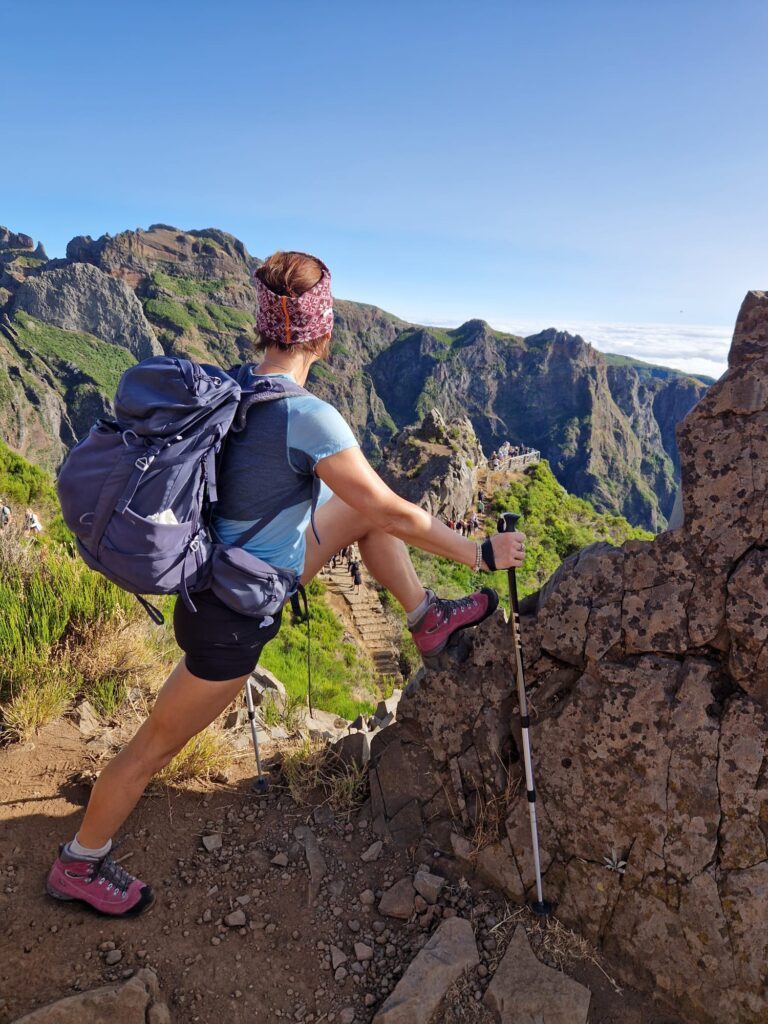
I definitely recommend stretching your lower limbs and hips during your hike.
-
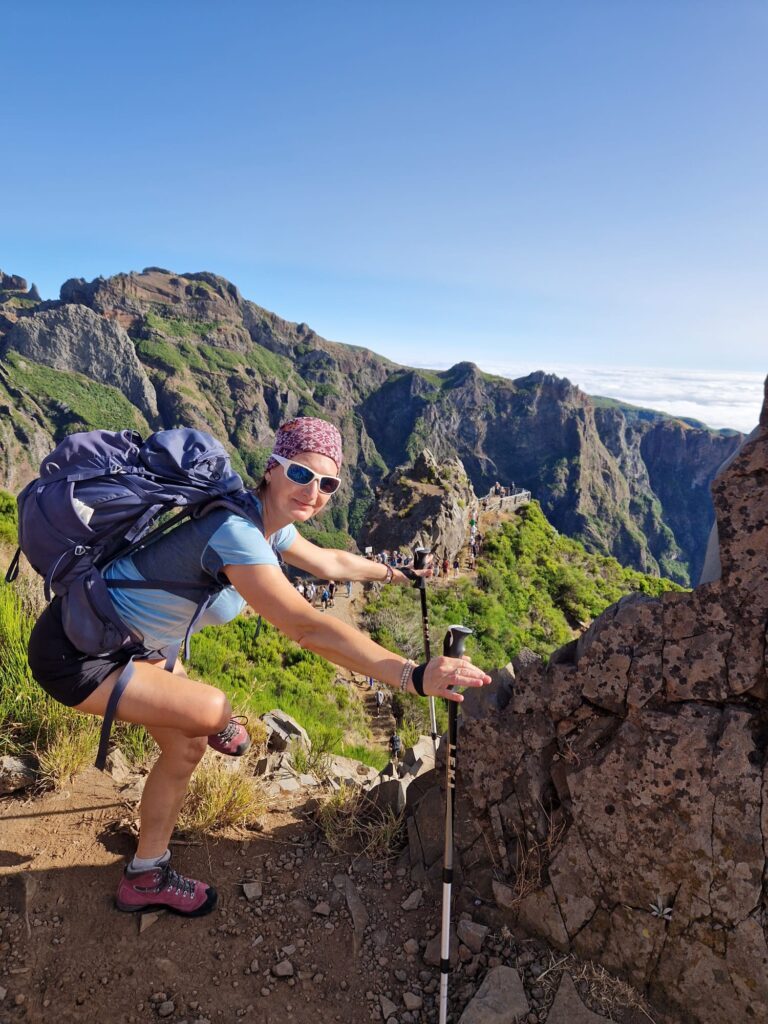
Use poles when hiking and learn how to use them correctly. Nordic walking or trekking poles are a fantastic aid. They reduce the load on your knees, hips, and spine, and they improve your stability.
Back Pain
Have you noticed we're moving beautifully up the body?
When we manage to align the lower limb—from the foot to the hip—and restore its function to the best of our ability, we straighten the pelvis and spine and improve our walking style. The abdominal muscles engage almost automatically, and we've basically won.
Common Causes of Back Pain
-
However, I often see a collapsed spine with downward pressure.
-
This downward pressure wedges the sacrum into the pelvis, causing the sit bones to move further apart. This creates more pressure on the pelvic floor, preventing the core from working effectively. The SI joint becomes blocked, which also changes the position of the femoral head in its socket, leading to pressure and increased wear on the hip joint.
-
If our hip joints are stiff, the femur doesn't rotate properly in the hip socket as we step forward and push off. Instead, this movement is transferred up to the lumbar spine, which suffers as a result. This can also happen if we wear tight, inflexible clothing.
-
Do you look a bit like you're pregnant? Let's be honest, that extra weight around the middle doesn't do our lumbar spine any favors.
-
What kind of backpack are you carrying? How are the straps adjusted? Are they at the same, correct length? Is there space between your back and the pack?
-
If you tighten the hip belt around your waist, you cut your core in half, creating an hourglass shape, and you can forget about functional abdominal and back muscles.
The Solution
-
The solution remains consistent: Align the body, strengthen it, create an upward lift against gravity, and learn how to walk properly. This is all taught in the online course RESTART YOUR BODY.
-
Buy the right backpack. Adjust the straps to the same length and set them so that your back can lean into the back of the pack, supported by an active abdominal wall.
-
Use the backpack's hip belt, but fasten it and tighten it around your PELVIS! This is the only way to offload the pelvic floor, SI joint, spine, and neck muscles. Cinching the pelvic girdle also provides relief to the hip joints.
-
Use poles when hiking and learn how to use them correctly. Nordic walking or trekking poles are a fantastic aid. They reduce the load on your knees, hips, and spine, and they improve your stability.
Neck and Cervical Spine Pain
Excellent. We're nearing the end of the article and reaching the top of our bodies: the head, neck, shoulders, and arms. These areas often give us trouble too—a stiff neck, numb fingers, or swollen arms.
Did you know your head weighs 5-7 kg (11-15 lbs)? That's quite a load, isn't it? What position is your head in right now? And what about when you're walking and hiking?
Common Causes of Neck Pain
-
If your head juts forward, it overloads not only the muscles in the front and back of your neck but also the muscles between your shoulder blades.
-
When your head is tilted more to one side, in addition to the areas mentioned above, you can also put extra strain on your SI joint, hips, and knees. That 6 kg of unevenly distributed weight affects your entire body with every step. One side of the body experiences more tension, while the other experiences more compression. Which part of your body will be the first to complain?
-
A backpack adds load and pressure to the neck muscles, which they certainly don't appreciate.
-
Our arms are also quite heavy. If they hang down all day during a hike, it's no wonder the trapezius muscles get exhausted.
-
If your arms are immobile and hang downwards, the lymph nodes around the shoulder joint and in the armpit are compressed. This is one reason our arms swell. The lymphatic system relies on muscle action to drain waste products.
-
If you use poles and your trapezius muscles hurt, it's due to incorrect pole length or a poor grip where you rely on an oppositional grip between your index finger and thumb.
The Solution
-
Align your head so it's centered over your body.
-
Choose a backpack with wider shoulder straps and a hip belt, which will relieve pressure from the straps on your trapezius muscles.
-
Use Nordic walking poles. They are better than trekking poles because they have a glove-like strap, so you don't have to grip the pole constantly.
-
The correct gripping function of the hand is through the pinky-side edge. This way, forces are channeled through the lower part of the shoulder blade. The thumb and index finger are designed for fine motor skills.
-
The correct pole length will relieve the neck muscles, spine, and hip joints, and stimulate the lymphatic system—but only when used correctly. This means your arm should swing back, extend fully at the elbow, and you should actively push off from the pole!
-
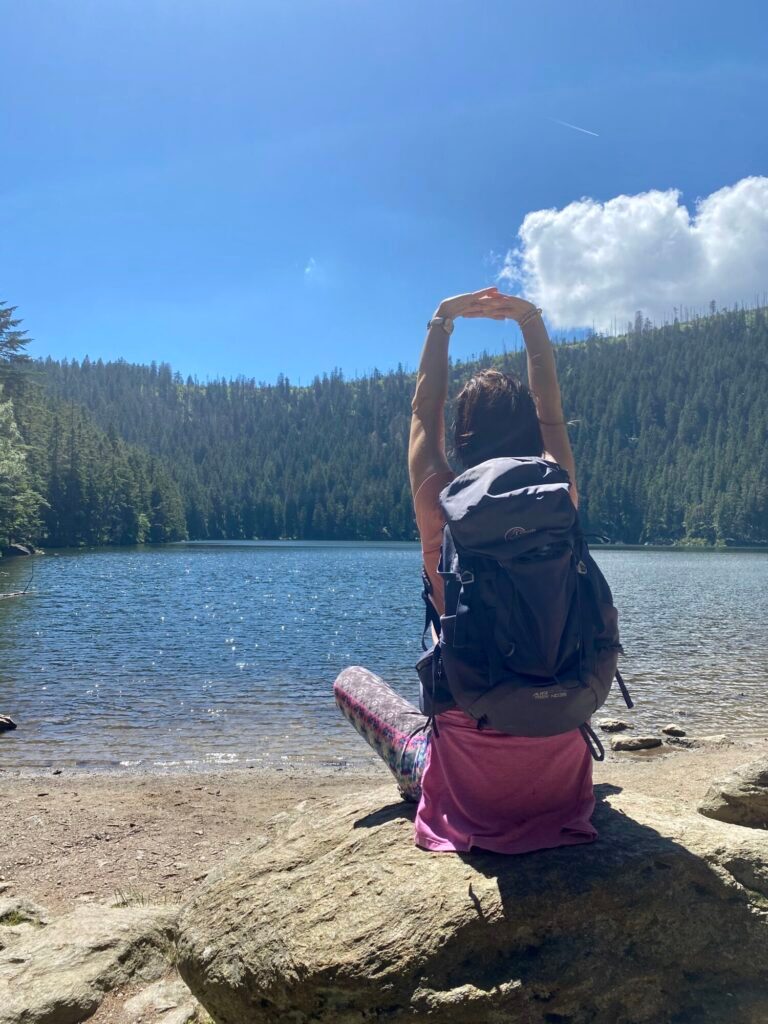
If you don't have poles, move your arms forward and backward while walking, and occasionally put your hands in your pockets to give your neck a break. Or, rest your hands on top of your head—this will lift your rib cage away from your pelvis, relieving your core and diaphragm.
Great, are we done? Well, you might also want to work on your breathing technique and learn to breathe only through your nose. You can learn more about breathing in the article BREATH IN CONTEXT and discover HOW and WHY you should breathe through your nose during sports in DISCOVER THE SECRET OF BREATHING DURING EXERCISE.
Do you have any questions? I'm waiting for you in the FB group "Škola pohybových návyků" (School of Movement Habits). I'd be happy to inspire you on how to keep your body moving and pain-free.
Enjoy movement, the mountains, hiking, and nature with a body that moves freely and without pain.
You can find many more related tips on my YouTube channel, where I have answered many questions in my live streams HERE >>>.
Tags
#Hiking#Pain Relief#Knee Pain#Back Pain#Movement Therapy#Outdoor