Back Pain? Your Fascia Might Be the Hidden Culprit
6. října 2019
4 min read
Updated 4. 6. 2026
MF
Martina Fallerová
Movement & Wellness Expert
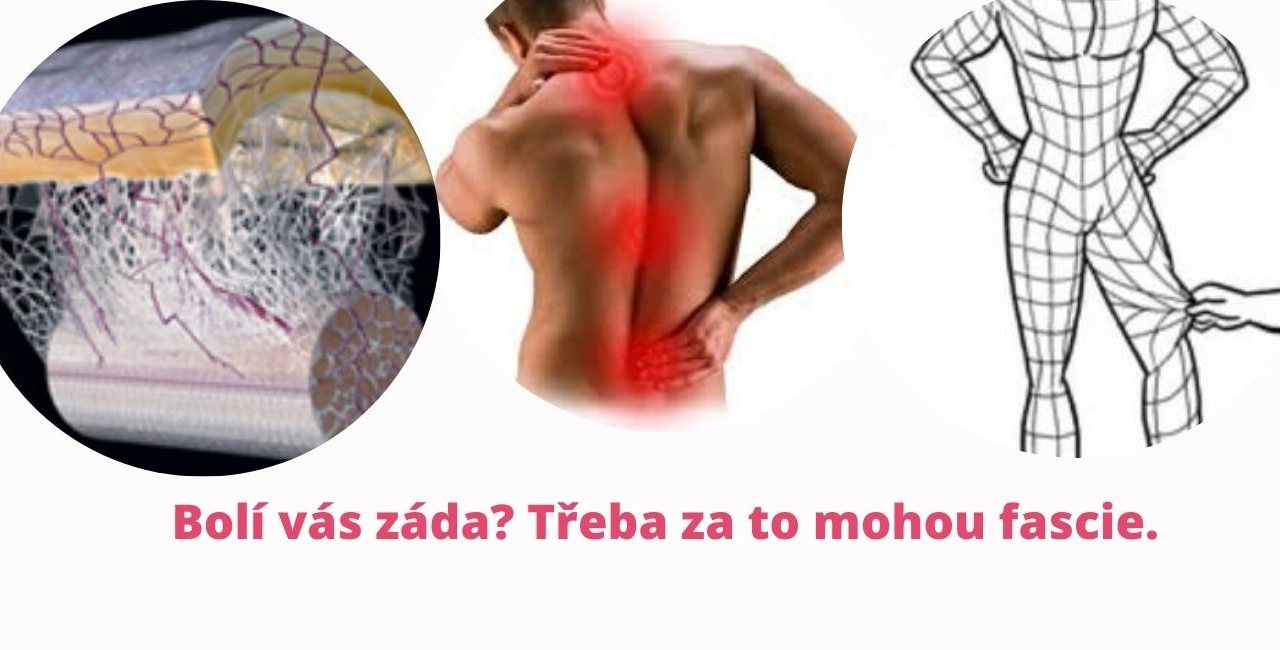

For centuries, science has dissected our bodies into individual parts. We learn separately about bones, muscles, and organs. But with the development of better imaging technology, we've rediscovered a long-overlooked tissue that permeates our entire body—one that envelops everything, connects everything, and serves to transfer forces and tension. It allows all our internal structures to glide against one another, enabling our bodies to move freely and elegantly. Thanks to this tissue, EVERYTHING in the body is connected to EVERYTHING ELSE. It's called FASCIA.
What is Fascia? The Body's 3D Spiderweb
FASCIA, also known as connective tissue, is the structure that envelops, separates, and supports every system in the body. It is composed of collagen, elastic, and other fibers surrounded by an intercellular fluid. Fascia wraps around blood vessels, nerves, bones, muscles, and even individual muscle bundles; our internal organs are also suspended within it.
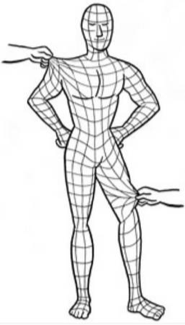
Essentially, this tissue forms a vast, spatial 3D spiderweb throughout our bodies, holding everything together while allowing all parts to move and glide against each other. It is also the richest sensory organ in the body and plays a crucial role in our stability—a function once thought to belong only to muscles and bones.
The Power of Elasticity
Fascia is constantly in motion, remodeling and adapting to the movements and positions of our body. One of its most important properties is ELASTICITY. This quality allows it to store kinetic energy to make subsequent movements easier.
Think of a bow and arrow. To shoot an arrow as far as possible, you must first draw the bowstring back as far as it can go. In the same way, healthy, elastic fascia stores and releases energy, making movement efficient. If our body is stiff and inelastic, we have to expend far more force and energy just to move.
A Living, Responsive Tissue
Fascia was once considered mere "filler" material, but in reality, it lives independently of the brain, reacts to stress, and constantly adapts to movement, changing its consistency like gelatin.
When a part of the fascial network is compressed or overloaded, it changes its structure. It stiffens, becomes matted or "felted," and grows dehydrated. Under stress, fascia reacts like a woolen sweater washed in hot water—it shrinks and loses its flexibility. When this happens, the structures underneath it can no longer be properly nourished. Over time, this can lead to pain in our body and joints. We now know this pain is often caused by the fascia itself, not the muscles, as was previously believed.
How Our Lifestyle Damages Fascia
The structure of our fascia also changes throughout our lives. With age, its fluidity and elasticity naturally decrease. However, factors like stress, illness, poor movement patterns, and excessive or one-sided strain from sports or work can accelerate this decline.
When this happens, the fascial network reshapes itself, stiffens, and its layers begin to stick together, preventing our bodies from moving freely and elegantly. If you have a sedentary job, hold a rigid posture at work or during sports, and don't stretch in the morning to "unstick" these layers, your body will gradually become less flexible. Movement will become more strenuous, and certain structures in your body will be chronically overloaded. And that’s when PAIN appears.
Restoring Healthy Fascia and Finding Relief
Recent research has shown that pain often arises when there is a lack of gliding ability between the fascial layers.
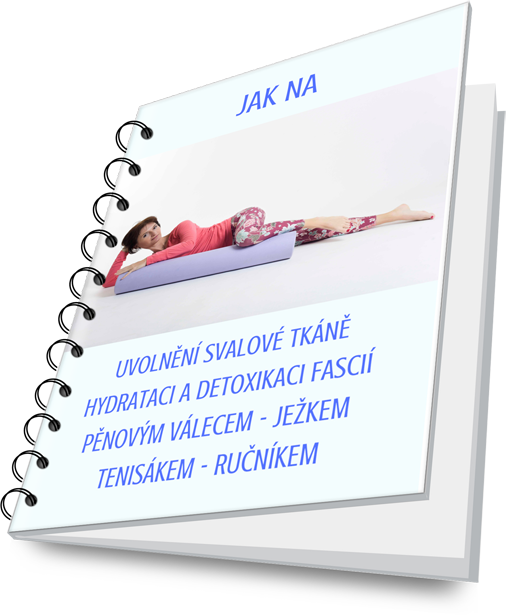
If you are troubled by recurring pain, there is a solution. It lies in a combination of release techniques that work directly with fascia, such as Rolfing or self-massage with a foam roller and spiky ball. These methods, combined with realigning your posture and learning new movement habits that are in harmony with your anatomy, can restore your fascia to a healthy state.
To help you with this, I've created an e-book: Muscle Tissue Release & Fascial Hydration and Detox & The Foam Roller in Action. You can find it HERE.
You can also join the School of Movement Habits for FREE. Enroll in the online course HERE.
Learn more about Fascia here.