Shoes or Barefoot? How to Walk Silently and Softly Like a Cat
1. května 2020
6 min read
Updated 4. 6. 2026
MF
Martina Fallerová
Movement & Wellness Expert

Here is the comprehensive Czech-to-English translation and restyling of the blog post, delivered as a single Markdown file.
The Evolutionary Marvel of the Human Foot
Thanks to evolution, we went from supporting ourselves on four limbs to standing upright on two—our lower limbs. This freed up our upper limbs, allowing us to interact with the world and perform complex tasks. But to do any of this, we first need to stand firmly on the ground, a task that falls to our feet. To be stable and move freely, our feet must provide stability, balance, shock absorption, a light and quiet step, and a powerful push-off—all at the same time.
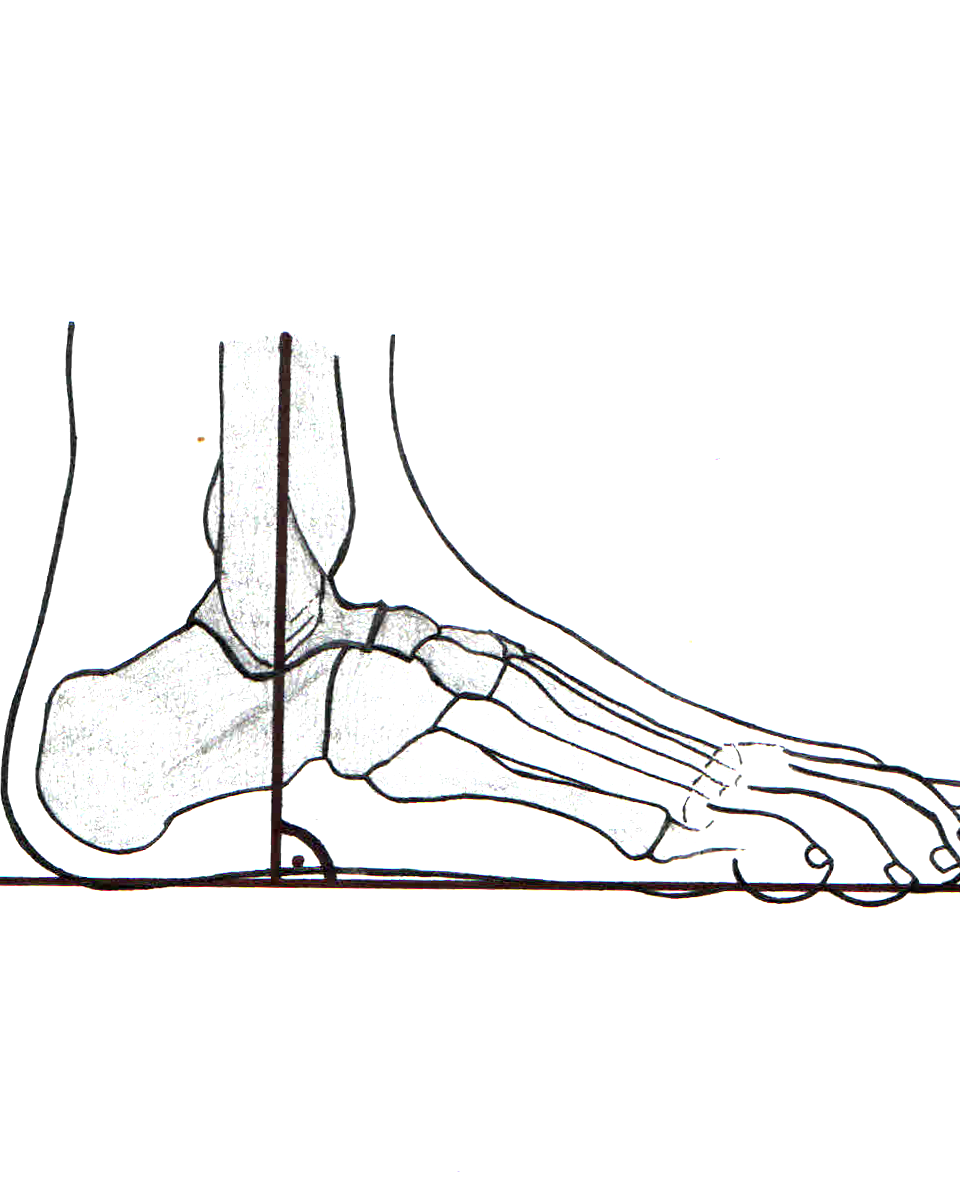
Nature’s solution to this challenge is a brilliant helical spiral. This structure is formed by the massive heel bone, a parallel big toe (unlike that of apes), and a three-dimensional arch. The arch itself is created through the external rotation of the heel bone and the internal rotation of the forefoot. If this mechanism fails to function correctly, the arch of the foot collapses. When the stability and shock absorption at the foundation of our body break down, we are setting ourselves up for problems in our knees, hips, or lower back.
A Symphony of Bones, Joints, and Muscles
The skeleton of the foot consists of 28 bones. For our purposes, the most important aspects are the positioning of the heel bone and the forefoot with its toes.
The upper ankle joint enables our forward and backward movement. The lower ankle joint compensates for uneven surfaces through rotation and tilting. The metatarsal bones allow the front and back of the foot to twist against each other in a spiral, creating the arch and providing stability. Finally, the base joints of the toes are responsible for push-off during walking, absorbing shock, rolling the foot forward, and braking on downhills.
Propulsion and deceleration are the work of the calf muscle and the short muscles of the toes. The small, deep muscles running along and across the foot reinforce the forefoot—the transverse arch—acting as shock absorbers and providing the power and impulse for push-off. When the foot lands, the transverse arch flattens. When the weight is lifted during push-off, if the muscles and fascia are functional, this stored energy is released again. This gives the foot both a powerful impulse and a sense of lightness.
Your Feet Are Sensory Organs
Our feet are also organs of touch. For a confident and stable gait, we need to feel, perceive, and grip the ground we walk on. We lost this ability when we started wearing shoes. We stopped sensing the surface, which led to a longer stride and a shift of our center of gravity backward. If you listen to your own walk, it's often too loud. This noise is caused by a heavy impact on the heel bone, from which vibrations travel upward and can cause problems with the Achilles tendon, knee, or hip joint.
Have you ever unexpectedly stepped on a Lego brick? The pain is sharp. But if we anticipate that we might step on something like that, we place our foot down differently—cautiously, with the muscles in our feet active. Uneven terrain affects us in the same way. When our foot is trapped inside a shoe, it loses its ability to perceive and grip the surface, and its mobility can become restricted. We then compensate for this lack of mobility in other segments higher up the body. Conversely, a supportive shoe can cause the muscles and ligaments in our feet to lose their stability and strength, forcing other parts of the body to take over and become overloaded.
The Importance of Natural Brakes
The better and more powerful a car is, the better its brakes need to be. You wouldn't ride a bike downhill without good brakes. In the same way, our lower limbs desperately need high-quality, functional brakes. When walking downhill, braking should be performed not only by our functional thigh muscles but also by our toes, which should spread and stiffen to grip the ground. If you were sledding, you'd brake with your heels, but when walking downhill, that job belongs to strong, firm toes. When this mechanism fails, our knees pay the price. Unfortunately, our feet are often imprisoned in narrow shoes, and we have forgotten how to use our toes.
Walk Like a Cat: Reclaiming Your Natural Gait
Our step should be soft and silent, like a cat's. We can achieve this by placing the foot down on the ground as a whole and feeling our toes firmly planted. This shortens the stride and brings the body's center of gravity directly over the foot. As a result, the position of the back leg changes, moving behind the body. When rolling off the back foot, the toes shouldn't bend passively; the foot should remain an integrated unit, and the push-off should come from the toes with a greater emphasis on the second toe. This also ensures correct knee alignment.
By now, most people have probably heard that our feet should be hip-width apart and that the second toe, knee, and hip should be aligned vertically. But when I look around, I see that reality is often very different.
Let's start by paying attention to our walk and our feet, even when they're inside shoes. Choose shoes that are wide, flexible, and have a thin sole. If you decide to walk barefoot, it's crucial to prepare your feet for this change. Otherwise, you can get into serious trouble, and all the praise for barefoot walking will backfire, leading to new problems in your body.
Walk softly like a cat and start noticing how your body reacts to this change. Don't forget to stand tall, keep your gaze forward, and allow your pelvis and chest to move freely in counter-rotation.