Health & Wellness
Breath in Motion: The Deep Connection to Your Body
19. července 2022
18 min read
Updated 4. 6. 2026
MF
Martina Fallerová
Movement & Wellness Expert

How Do YOU Breathe?
Take a moment for a quick self-assessment. How many of these questions do you answer "YES" to?
- Do you sometimes breathe through your mouth during your daily activities?
- Do you breathe through your mouth while you sleep?
- When you're resting, is your breathing visible?
- Do you sometimes hear yourself breathing while at rest?
- When you observe your breath, do you notice more movement in your chest or your abdomen?
- Do you sigh regularly throughout the day?
- How do you breathe when you're talking?
- Where does your tongue rest during the day?
So, how many times did you answer "YES"? I'm genuinely curious.
P.S. Don't judge your answers. Just observe. And while you're at it, pay attention to how you're breathing right after you wake up.
Do You Live by the Inhale or the Exhale?
If you answered "YES" to any of the questions above, it might indicate a tendency towards OVER-BREATHING. This means the volume of air—and oxygen—you're inhaling is greater than what your body actually needs.
The Hidden Problem of Chronic Over-Breathing
It's believed that one of the biggest obstacles to our health is chronic over-breathing.
For years, we've been taught the benefits of deep breathing for stress management. A big inhale feels good. It stretches the upper body and creates a subsequent feeling of relaxation. This has led many of us to believe that breathing more is better.
Oxygen is the fuel our muscles need to work efficiently. A common misconception is that breathing a larger volume of air will increase the oxygenation of our blood.
The reality is that a healthy person's blood is already saturated with oxygen.
According to the latest research, it's believed that most of us BREATHE 2-3 TIMES MORE AIR than we actually need, without even realizing it.
The amount of oxygen that our muscles, organs, and tissues can actually use does NOT depend on the amount of oxygen in our blood.
In a healthy individual, red blood cells (hemoglobin) are 95-99% saturated with oxygen. This is more than enough, even for a strenuous workout.
What truly determines how much oxygen our body can use is the amount of CARBON DIOXIDE (CO2) in our blood. CO2 is the catalyst that allows oxygen to be released from red blood cells to nourish our muscles, organs, and tissues. This phenomenon is known as the BOHR EFFECT.
When we breathe correctly, we maintain an adequate level of carbon dioxide, and our breath is quiet, gentle, and rhythmic.
When we breathe too much, our breath becomes heavy, intense, and irregular.
Chronic over-breathing leads to poorer physical conditioning and can contribute to a wide range of issues, including anxiety, asthma, fatigue, insomnia, heart problems, and even obesity. It also leads to the constriction of airways, limits the body's ability to oxygenate itself, and tightens blood vessels, which reduces blood flow to the heart and other organs and muscles.
Let's shift our focus to a LONGER, CALMER EXHALE. Let's enjoy the beautiful, calm pause of 2-3 seconds after the exhale.
By doing this, we increase the amount of carbon dioxide in our body, which in turn delivers more oxygen to our muscles and organs, including the heart and brain. This directly boosts our physical capabilities.
Higher levels of CO2 can also trigger a greater contraction of the spleen, leading to the release of more red blood cells and, consequently, greater oxygenation of the blood.
An increase in CO2 lowers the blood's pH, making it easier for oxygen to be released from hemoglobin into the tissues, which further improves oxygen saturation where it's needed most.
Let's breathe lightly to breathe right.
Practice: Restarting Your Respiratory Center
Slow down your breathing just enough to create a tolerable need to inhale. This practice will help restart your respiratory center and improve your body's tolerance to carbon dioxide.
- Sit or stand up straight.
- Ground yourself through your feet. If you're sitting, also press gently into your sit bones.
- Lift your chest as far away from your pelvis as possible and extend the crown of your head toward the sky.
- Gently support your lower back with your abdominal wall, feel your ribcage supported by your sternum, and notice the width of your collarbones.
- Imagine your diaphragm is like a ball located in the lower part of your ribs and upper lumbar area.
- With each inhale, feel the ball gently inflate. With each exhale, feel it deflate freely and effortlessly, purely through the elasticity of your lungs, chest, and diaphragm.
- With each breath, inhale a smaller amount of air than you might feel like you want.
- Slightly slow down your exhale until you feel a tolerable air hunger.
- With this exercise, you can reduce your respiratory movements by 20-30%.
- If you feel the muscles around your stomach tensing or tightening, or if your breathing rhythm becomes disrupted, the air hunger is too intense.
- In that case, stop the exercise and return to it once the discomfort subsides.
- This exercise can be done in two sets of 3-5 minutes each.
Physiological Changes to Notice
Accumulating carbon dioxide can trigger the following physiological changes:
- A feeling of growing warmth.
- Pinkish or red cheeks.
- An increase in saliva production, which signifies that the body has switched to relaxation mode by activating the parasympathetic nervous system.
My Experience: Right now, I'm on vacation by the sea, and I've been having fun with this. I've been restricting my breathing and really enjoying that pause after the exhale. It's so relaxing while lying on a sunbed. But the real challenge was in the sea. While swimming breaststroke with goggles, I realized I've been inhaling and exhaling through my mouth my whole life. So, I decided to change it. At first, inhaling through my nose was tough—a wave would come, water would go up my nose, and I'd get a saltwater sinus rinse! Also a good thing, I suppose. But practice makes perfect. It's amazing now. It forces me to swim at a calm, relaxed pace. The swim is a beautiful challenge, and I'm loving the tranquility. I'm not rushed or exhausted, and my muscles have plenty of oxygen. It's so worth it. I can't wait to hear about your experiences!
The Nose: Your Most Important Organ

Nasal breathing creates about 50% more air resistance than mouth breathing in a normal person, leading to a 10% higher oxygen uptake.
Nasal breathing warms and humidifies the air. Air at 6°C (43°F) entering the nose will be warmed to 30°C (86°F) by the time it reaches the back of the throat, and it will reach body temperature, 37°C (98.6°F), by the time it gets to the lungs.
Nasal breathing removes a significant amount of germs and bacteria from the air we breathe.
Nasal breathing during physical exertion allows for sufficient training intensity to achieve an aerobic workout (based on heart rate) without causing muscle cramps and lactic acid buildup.
Your Nose: A Reservoir of Nitric Oxide
The nose is a reservoir for NITRIC OXIDE (NO), a gas that is essential for our health and plays a crucial role in oxygenating the body.
NO is produced in the paranasal sinuses. When we inhale through our NOSE, NO travels with the air into our lungs.
This rapidly decaying gas widens the airways and does the same for our blood vessels!
NO plays a significant role in vasoregulation—the opening and closing of blood vessels—as well as in homeostasis and immune responses. It helps prevent high blood pressure, lowers cholesterol, keeps arteries young and flexible, and prevents blockages, all of which reduce the risk of heart attack and stroke.
NO also plays an important role in penile erection—in fact, Viagra is based on this principle. Better breathing can lead to a better s@x life.
For athletes, NO is key for relaxing the smooth muscle layer in the airways, allowing for better oxygen transport.
Holding your breath after an exhale leverages the benefits of nitric oxide. The concentration of NO builds up during the hold, and when you finally inhale, you direct this concentrated gas into your lungs. (If you were to hold your breath after an inhale, you would just exhale the NO out.)
Performing a breath-hold after an exhale simulates living at an altitude of 2,500-4,000 meters (8,200-13,100 feet).
This drop in blood oxygen levels also triggers a response in the kidneys, which secrete the hormone erythropoietin, or EPO. One of the functions of EPO is to stimulate the maturation of red blood cells in the bone marrow, thereby increasing oxygen delivery to cells.
EPO concentration can increase by up to 24% when the body is exposed to lower oxygen levels through breath-hold exercises.
It's crucial that after each breath-hold, you are able to return to normal, calm breathing. If not, the hold was too long.
Training muscles without sufficient fuel—oxygen—causes a buildup of lactic acid, creating that burning sensation and cramps in the muscles.
You can increase NO production up to 15 times compared to a quiet exhale simply by HUMMING.
P.S. To make your humming really effective, SIT UP STRAIGHT and engage your PELVIC FLOOR.
Summary of Nasal Breathing Benefits
- Filters, warms, and humidifies the air before it enters the lungs.
- Lowers the heart rate.
- Delivers Nitric Oxide to the lungs, opening airways and blood vessels.
- Improves oxygen delivery throughout the entire body.
- Reduces lactic acid by delivering more oxygen to working muscles.
How's Your Conditioning? How Long Can You Hold Your Breath?
The Body Oxygen Level Test (BOLT), described in the image below, is a great way to measure this. Perform it in a calm state, ideally after waking up. Do not do it after a meal.
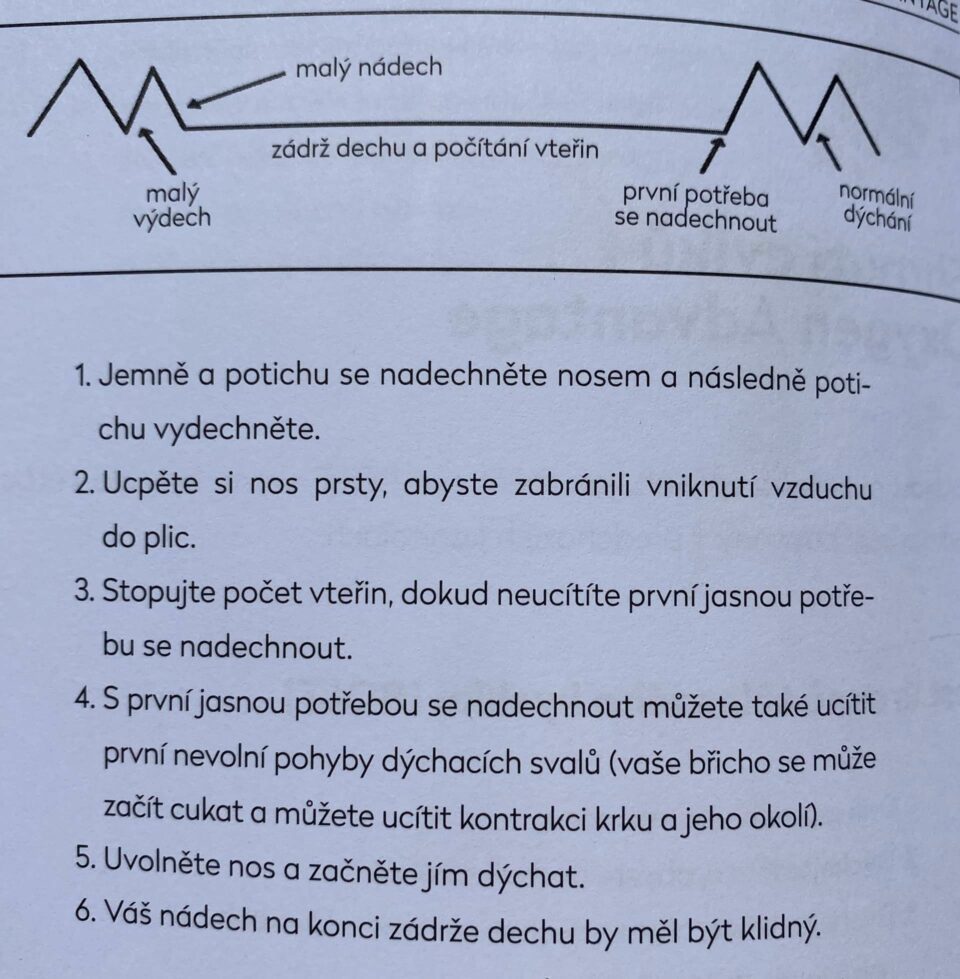
How to Perform the BOLT Test:
- Take a normal, calm inhale through your nose.
- Take a normal, calm exhale through your nose.
- Pinch your nose closed and start a timer.
- Measure the time in seconds until you feel the first distinct urge to breathe.
- Release your nose and resume breathing.
- Your first breath in should be calm.
- If you have to gasp for air, you held your breath for too long.
The BOLT score is the time (in seconds) you can comfortably hold your breath until you feel the first definite urge to breathe.
To increase your BOLT score, you need to practice nasal breathing at all times, including during physical training and sleep. Also, try to avoid taking large breaths when sighing, singing, or talking.
My Observations: I finally understand why my legs get heavy and my fingers and toes get icy cold when I'm hiking uphill. I automatically open my mouth to breathe! It's also been interesting to focus on nasal breathing while running. I'm taking it slow and not pushing my body too hard. The more I relax, the better I can sync my breath and movement. I truly love this process of exploring my body.
What's your BOLT score? Share it in the comments! Through gradual training, I've managed to get mine up to 32, which is apparently great. Now I'm curious to see how I'll feel on my next uphill hike. :-)
CO2: The Gateway for Oxygen to Your Muscles
When the concentration of oxygen in the blood decreases and the concentration of CO2 increases, it stimulates an inhale. We perceive this stimulus as a contraction of muscles in the neck and abdomen, along with an urge to breathe. How our body reacts depends on how our chemoreceptors interpret this signal and how sensitive they are. The key point here is that our body needs to get rid of EXCESS CO2, NOT AS MUCH CO2 AS POSSIBLE.
Over-breathing over a period of days or weeks removes more CO2 than necessary, which increases the sensitivity of our brain's receptors, making us feel the urge to breathe sooner. If our receptors can handle a higher tolerance for CO2, our breathlessness will decrease, allowing for more efficient oxygen transport to working muscles—leading to better performance, even in sports. Your breath will become gentle, both at rest and during exertion.
If the gate is only partially open, only some of the available oxygen can get through to your muscles and organs. This is why we might gasp for air during exercise while our limbs start to cramp up.
But if the gate is wide open—thanks to sufficient CO2—oxygen flows freely, allowing us to sustain physical activity for longer and at a higher intensity.
The Source of CO2
The concentration of CO2 in the Earth's atmosphere is not very high, so we don't get it from the air we breathe.
We produce CO2 in the cells of our tissues during the metabolic processes that transform food and oxygen into energy and muscle work. Thanks to CO2, the body can:
- Release oxygen from the blood into the cells.
- Dilate the smooth muscles in the walls of airways and blood vessels.
- Regulate blood pH.
Over-Breathing Restricts Blood Flow
We can also say that reduced blood flow to the brain is directly proportional to a decrease in CO2. In some individuals, the diameter of blood vessels has been shown to decrease by up to 50 percent. A loss of CO2 in the blood can lead to the contraction of smooth muscles in the airways—causing breathlessness and asthma. One in every ten adults and children suffers from asthma. In contrast, an increase in CO2 opens up the airways, allowing for better oxygen transport and making it easier to breathe, even for people with asthma.
How to Clear a Stuffy Nose
PRACTICE:
Do not perform this exercise if your BOLT score is less than 10 seconds, or if you are pregnant, have high blood pressure, cardiovascular issues, diabetes, or any other serious health condition. (BOLT score is explained above.)

Instructions to Clear a Stuffy Nose:
- Take a small, silent inhale and a small, silent exhale through your nose.
- Pinch your nose closed to hold your breath.
- While holding your breath, gently nod your head up and down or sway from side to side.
- Continue until you feel a strong but manageable urge to breathe.
- Let go of your nose and breathe gently through it.
- Calm your breathing as quickly as possible.
Dieting and Exercising But Still Stuck? It Could Be Your Breath.

The Quality of Your Breath May Be the Cause
If there is too little carbon dioxide in your blood, oxygen cannot be released from your red blood cells to supply your internal organs. When this happens, your organs can't process food efficiently.
Calorie Restriction Extends Life
Excess calories can cause metabolic changes, and similarly, excess oxygen can prematurely damage your tissues by creating an overabundance of free radicals.
What if healthy breathing habits are even more important for developing good fitness than dietary habits?
Overweight individuals tend to have poor breathing habits. They often exhibit chronic hyperventilation, regular sighing, and shallow chest breathing through the mouth.
Gaining extra weight causes us to breathe more heavily, not just during physical activity but also at rest.
Observations have revealed a relationship between breathing volume and food consumption. The question is whether processed, acid-forming foods lead to an increase in poor breathing habits, or if poor breathing habits lead to a craving for these foods.
The prevailing view is that a feedback loop exists between breathing and weight gain, and this loop needs to be gradually broken.
If the blood's pH drops below 7.35, it becomes too acidic, which triggers an increase in breathing volume as the body tries to expel carbon dioxide (which is acidic). This excess acidity often occurs when we eat processed and acid-forming foods, which in turn leads to heavier breathing and other symptoms like bloating, lethargy, and weight gain.
Conversely, with chronic over-breathing, the body expels too much carbon dioxide, causing the blood's pH to rise above 7.45, becoming too alkaline. One theory explaining the link between over-breathing and weight gain is that the body starts craving processed, acid-forming foods in an attempt to normalize blood pH. Proper breathing volume and a healthy diet therefore work together to maintain a healthy pH balance.
According to studies, when people learned how to break their poor breathing habits and increased their BOLT score to at least 10 seconds, they began to automatically prefer healthy foods over acid-forming ones.
Breathing might just be the missing link in most weight loss programs.
A parallel can be drawn to the lack of appetite experienced at high altitudes.
In tests conducted on mice, it was found that lower oxygen saturation led to a reduction in weight, blood sugar, and cholesterol. Scientists concluded that this was also caused by an increased synthesis of EPO in the kidneys.
Nasal Breathing and Tongue Posture: The Keys to Healthy Facial Development
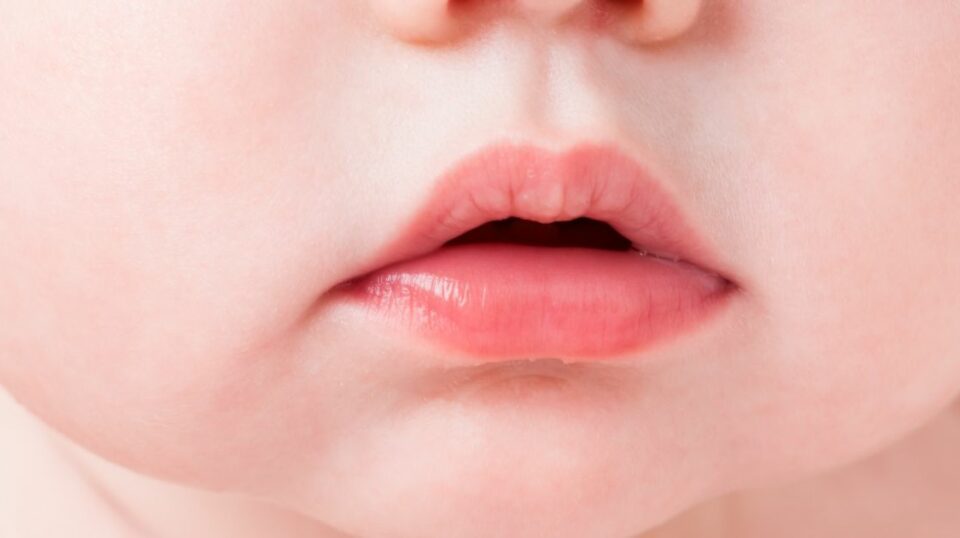
In a random sample of 370 children aged 3-9, researchers found that 55 of them were mouth breathers.
Children who regularly breathe this way tend to develop negative changes in their facial structure, jaw, and teeth alignment.
Mouth Breathing Affects Facial Shape in Two Ways:
- The face tends to become longer and narrower.
- The jaw does not fully develop and becomes recessed from its ideal position, which restricts the size of the airways. If the jaw is not positioned forward enough, it will obstruct the airways.
Quick Test:
Close your mouth, push your chin forward, and inhale through your nose. Notice how much air flows down your throat behind your jaw.
Now, pull your chin back as far as you can and inhale through your nose. How much air flows into your throat now?
My Question for You:
In what position is your jaw when you're looking at your phone or computer? I'd love for you to share what you discover in the comments!
The lips and cheeks create inward pressure on the face, while the tongue acts as a counterbalance, providing outward support.
When the mouth is closed, the tongue rests on the roof of the mouth, creating a gentle force that supports the upper jaw.
Because the tongue is wide and U-shaped, our upper jaw should also be wide and U-shaped. A wide, U-shaped jaw is capable of accommodating all of our teeth.
If we breathe through our mouths, it's unlikely that the tongue will rest on the upper palate. In children, this means the dentition may not develop correctly. The jaw then takes on a narrow, V-shape.
This is the reason for narrowed faces, crooked teeth, and orthodontic problems.
We spend thousands on orthodontic treatment, but if we don't address the underlying issue of mouth breathing, the problems can return. We might have been able to avoid braces altogether if we had simply breathed through our noses from a young age.
Chronic mouth breathing can also lead to postural changes, affect muscle strength, and result in a narrow chest.
These same children often suffer from poor health, low energy levels, and weak concentration.
These children don't sleep well at night, which affects their growth and school performance. They are sometimes even misdiagnosed as having ADD or being hyperactive.
By age 9, about 95% of head growth is complete. The lower jaw continues to develop until around age 18.
Nasal breathing and proper tongue placement on the roof of the mouth help create the ideal conditions for healthy facial development.
P.S. Our bodies are truly fascinating, and I absolutely love exploring how everything is interconnected. What have you discovered about your own body? For me, it was having two teeth extracted, followed by fixed braces in my 30s—the options weren't as advanced back then. Then, in my 40s, I had two surgeries where they took grafts from the roof of my mouth and stitched them to my receding gums. My sons both had braces, too. It seems like almost every kid gets them these days, doesn't it? 😏
I discussed breathing in a broader context during a live broadcast, where I also answered questions from my Facebook group, "Škola pohybových návyků" (School of Movement Habits). The recording is saved on my YouTube channel HERE.
<figure>
<a href="https://www.youtube.com/live/qfRk4BzHJgw?feature=share">
<img src="images/covery-videi-9-1024x576.jpg" alt="YouTube video thumbnail for a live stream about breathing.">
</a>
<figcaption>
<a href="https://www.youtube.com/live/qfRk4BzHJgw?feature=share">https://www.youtube.com/live/qfRk4BzHJgw?feature=share</a>
</figcaption>
</figure>
All the information presented here is drawn from the two books shown in the image below.

Tags
#Breathing#Health#Wellness#Nasal Breathing#Oxygen Advantage