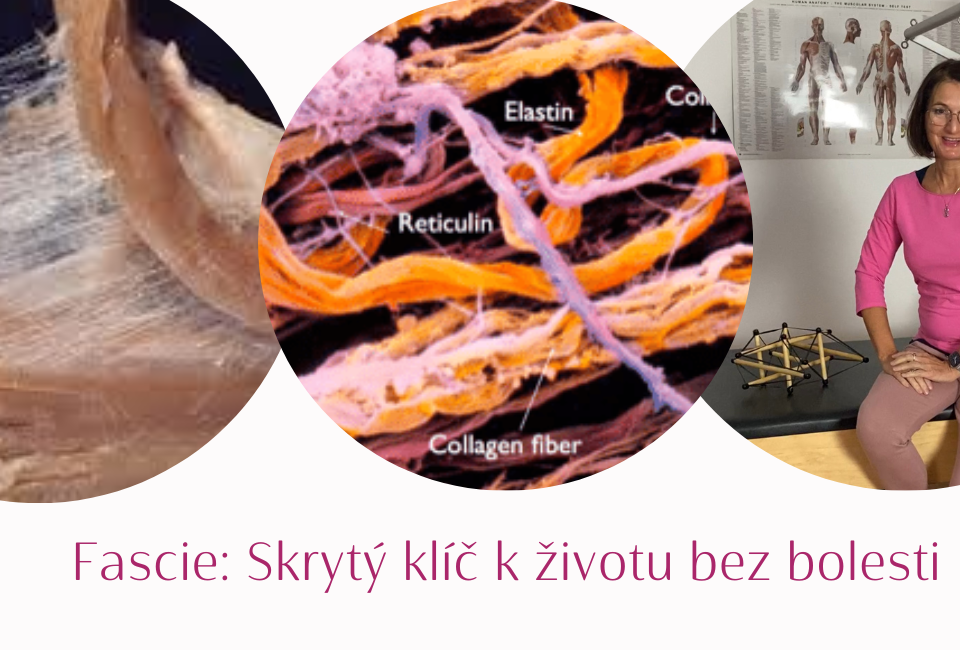
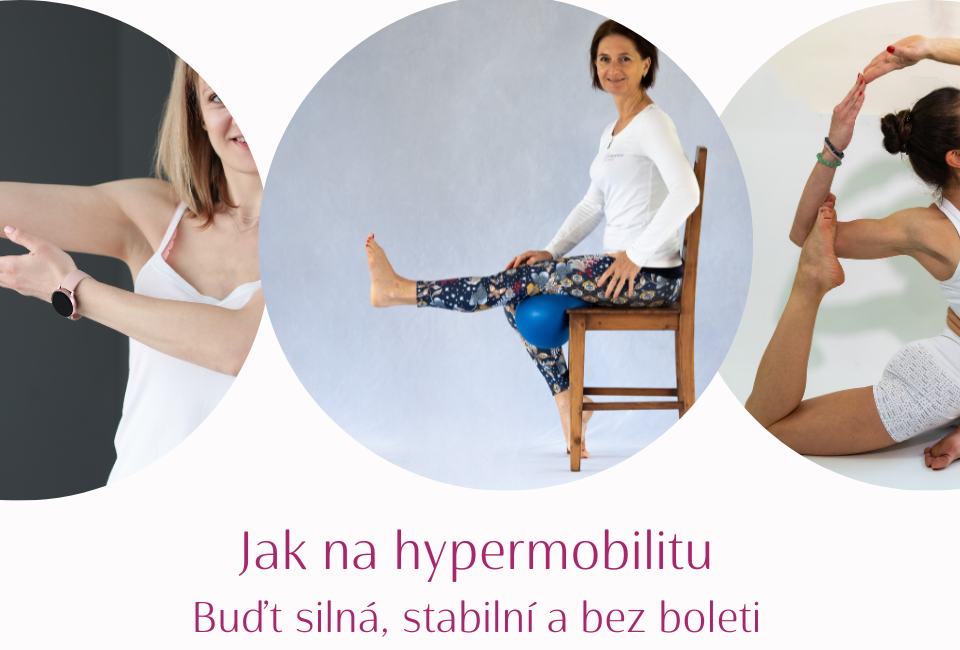
Heel & Achilles PainBack PainDiastasis RectiFasciaFunctional CoreIncontinenceKnee HealthGait TrainingHip HealthPelvic FloorShoulder HealthMovement EducationHealthy Movement
Hypermobility and Fascia: Gaining Support and Stability Through Proper Muscle and Fascia Activation
24. března 2025
11 min read
Updated 4. 6. 2026
MF
Martina Fallerová
Movement & Wellness Expert
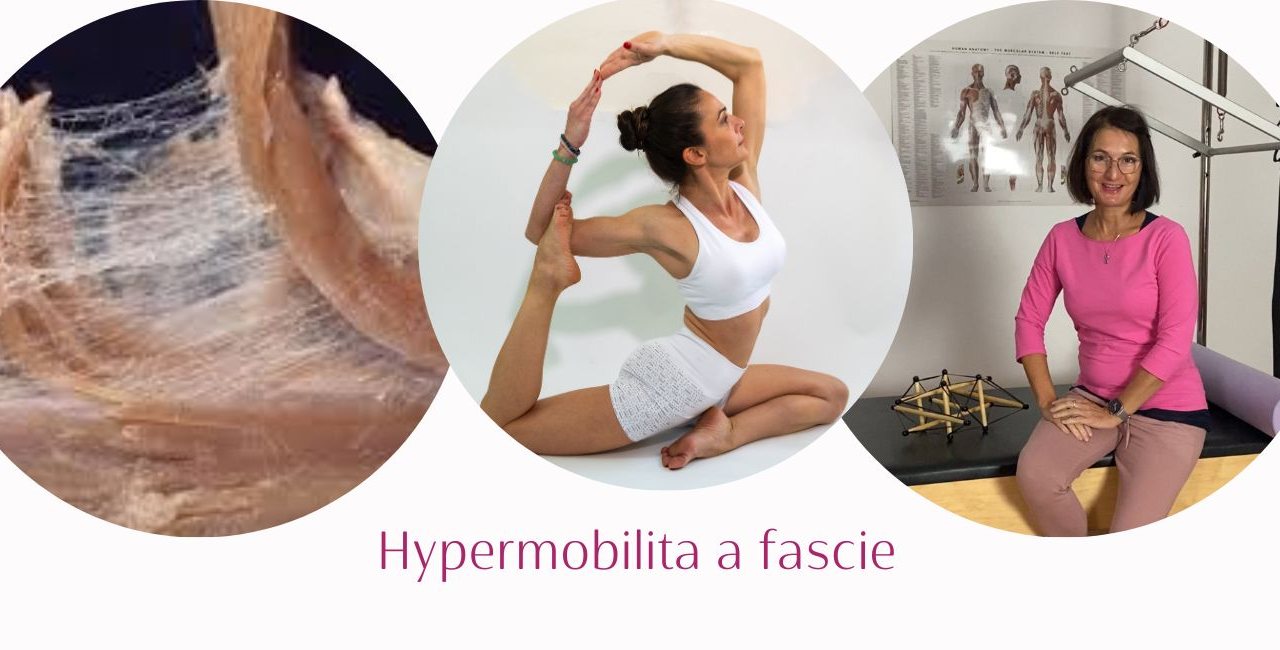
Hypermobility Isn't Just About Joints—It Affects Your Entire Fascial System
Many people with hypermobility experience pain, instability, and recurring injuries because their bodies lack natural support. Traditional exercises focused solely on strengthening muscles often don't work because they fail to address the deeper cause of the problem—changes in the fascia and connective tissues. But don't worry, together we can find a solution.
In this article, I'll show you exactly how hypermobility affects your fascia, why common exercises may not be enough, and most importantly, which specific steps will help you build a stable, pain-free body.
Hypermobility: More Than Just Flexibility
Are you incredibly flexible and bendy, but also plagued by persistent joint and muscle pain?
This is a typical sign of hypermobility—a condition where the joints and connective tissues are excessively loose and elastic.
Hypermobility often leads to:
- Reduced joint stability
- Increased risk of injury
- Chronic muscle and ligament pain
The key to alleviating these issues is understanding how hypermobility changes the structure and function of fascia throughout your entire body.
Fascia is an interconnected 3D network that gives your body shape and support. If you suffer from hypermobility, your fascia may be too flexible and loose, or conversely, too stiff, preventing your muscles from engaging properly.
Studies show that people with hypermobility experience specific changes in their extracellular matrix—the "building material" of connective tissues. These changes directly impact the mechanical properties of fascia and its ability to transmit force.
This means that it's not enough to just strengthen muscles; you need to work with the fascia as a whole. I explain all of this in my free practical lecture, FROM PAIN TO JOY. You can sign up for it here.
The Fascial System and Its Changes in Hypermobility
Have you ever wondered why you still experience pain and instability despite regular exercise?
The answer lies deep within your fascial system—the complex network of connective tissue that surrounds and interconnects every part of your body.
In hypermobile individuals, there is often reduced stiffness and increased extensibility in these tissues. These changes disrupt the natural ability of the fascia to provide support and transfer forces throughout the body.
Alternatively, the fascial system can become stiffer, preventing its layers from gliding smoothly over one another, leaving muscles weak and unable to function correctly. This creates an imbalance of tension between the fascia and muscles.
Imagine the fascial system as your body's internal architecture. When the support beams are too loose, the entire structure loses its stability. This is precisely what happens with hypermobility.
Using ultrasound imaging, scientists have found that the fascia in people with hypermobility can be up to 40% thicker than in the general population. At the same time, however, the muscles beneath the fascia are not adequately strong or active. This imbalance leads to joint overload and pain.
The key to resolving this is to restore balance and proper tension throughout the entire fascial network.
Why Traditional Approaches Often Fail
Do you exercise diligently, stretch, and strengthen, but the pain and instability persist?
It's frustrating, but it's not your fault. Common exercise routines often fail to consider the specific needs of a hypermobile body.
Traditional approaches often fall short for these reasons:
- They focus solely on muscles, not the fascial system.
- They don't develop a balance between stability and mobility.
- They don't respect the altered neuro-muscular control present in hypermobility.
Excessively stretching tissues that are already loose can worsen instability. Simply "strengthening" muscles doesn't address the deeper problem within the connective tissues.
To achieve real change, you need an approach that works with the body as an interconnected whole—from your breath to the most delicate fascial structures.
Breathing as the Foundation of Stability
Does breathing seem like an automatic, insignificant process for body stability?
Think again. Proper breathing is the fundamental building block of your deep stabilization system.
Practicing abdominal-diaphragmatic breathing will help you:
- Activate your deep stabilizing muscles
- Regulate tension in the abdominal and pelvic fascia
- Connect your diaphragm, pelvic floor, and deep abdominal muscles
Imagine your breath as an internal massage that orchestrates the interplay of key stabilizing muscles. With each inhale and exhale, you create gentle pulsations in your abdominal cavity that stimulate deep fascia and muscles.
The diaphragm is part of the deep fascial line, which begins at the soles of your feet and serves as the true functional core of our body. I write more about this in this article.
Regularly activating your body's true functional core significantly improves trunk stability and alleviates back pain. By doing so, you create a solid foundation upon which you can build other elements of fascial stability.
Breathing as Nourishment for Your Tissues
Breathing not only stabilizes the spine, but every cell in our body needs oxygen. Some people may over-breathe, achieving 100% oxygen saturation in their blood, but this oxygen remains bound to hemoglobin and cannot transfer to the cells. When cells lack oxygen, we have 19 times less energy.
Other people simply forget to breathe. Some hypermobile individuals often feel cold and frequently suffer from anemia. Even breathing techniques can help increase hematocrit levels. Read more about that here.
Creating Optimal Tension in the Fascial Network
Hypermobility often leads to a feeling of being "loose" and lacking internal support—as if you were a puppet with slack strings.
To create stability, you need to find the optimal level of tension throughout your entire fascial network—not too much, not too little, but just right.
You can achieve this through:
- Targeted exercises based on the principle of biotensegrity—meaning you focus on whole-body connections and balanced tension, not isolated strengthening.
- Slow, mindful, and coordinated movement.
- Gradual increases in load to allow tissue adaptation.
The principle of biotensegrity describes the body as an interconnected three-dimensional network where all parts work together to maintain stability. Just like in modern architecture, forces in the body must be evenly distributed and balanced.
Through gentle, slow movements and conscious touch, you can communicate with your deep fascia and guide it toward better function. We can also address the fascial network through self-massage Rolfing techniques, which are part of my online programs here. Think of it as tuning an internal instrument—you're searching for the right resonance and harmony among all its parts.
Try the following exercise:
Lie on your back, bend your knees, and place your feet against an opposite wall. Keep your spine elongated in a neutral position. Place your hands on the insides of your thighs and gently press your palms against your thighs, while your thighs press back against your palms. Add a push from your feet. Maintain this gentle, mutual pressure while prolonging your exhale and gently breathing into your diaphragm (more here). Notice what's happening in your body and what feels active. Then, place your hands on the outside of your thighs and press them against your palms. Again, notice what’s happening in your body.
Activation should only be around 30%. This gentle effort allows all the systems in your body, from your feet to your tongue, to engage evenly.
Studies have shown that exercises based on biotensegrity principles improve stability and movement coordination in hypermobile clients. A key finding was that even small changes in tensional balance can have a significant impact on the body's overall function.
I use these principles in all of my online programs here.
With patient and consistent work on your fascial network and muscles, you can gradually build an "internal corset" of stability without restricting your natural range of motion.
Targeted Training for Muscles and Tendons
Do you exercise regularly but still struggle with pain and overloaded joints?
This could be a sign that your muscles and tendons are not optimally prepared for the demands associated with hypermobility.
For your musculoskeletal system to function correctly, you need to:
- Activate your deep stabilizing muscles.
- Control the balanced tension in engaged muscles and their coordination.
- Gradually increase the strength and endurance of larger muscle groups.
- Support the adaptation of tendons and ligaments to load.
The key is to start from the center—with the deep muscles of your trunk that create internal support. I talk more about them here.
You can gradually add exercises like push-ups or squats. These movements stimulate the natural interplay of muscles and fascia, teaching your body to transfer forces efficiently.
Don't forget the gradual adaptation of your tendons and ligaments. Hypermobility often leads to their overload and micro-traumas. By slowly and patiently increasing the load, you give your tissues time to adapt and strengthen. Imagine it like slowly drawing a bow—moving too quickly would snap the string.
By combining targeted exercises, patience, and respect for your body's natural limits, you can progressively build strong and resilient muscle-tendon units that will support you in everyday life.
A Comprehensive Approach for Everyday Life
Are you committed to working on your stability but unsure how to integrate new habits into your daily life?
The most important thing is to connect the principles I teach in my ONLINE SCHOOL OF MOVEMENT HABITS and integrate them into your everyday activities and situations.
Here are some tips on how to do it:
- Be mindful of your posture while sitting, standing, and walking.
- Use your breath as a tool for stabilization and support - more here.
- Check in during the day to see if you are breathing—your cells need oxygen, otherwise, your muscles can tighten.
- Find regular time for both exercise and relaxation.
Imagine your body as an architectural structure where fascia is the connecting element. With every breath and movement, I shape the space within my body.
Try this little experiment:
When brushing your teeth, alternate standing on one leg and then the other, and notice how your deep stabilization system engages from your foot through your pelvic floor and even your tongue. When driving, gently push off from your sit bones. Gradually, these small moments of awareness will become a natural part of your life.
My practice confirms that integrating therapeutic principles into daily activities leads to long-term improvements in quality of life. It shows that my clients who master simple strategies for improving their posture and breathing in everyday life—at work, during sports, and in daily routines—maintain a high quality of life without back and joint pain. I teach all of this in the Online School of Movement Habits here.
Your journey to stability and freedom of movement isn't a sprint; it's a lifelong ultramarathon. Patience, self-kindness, and celebrating small victories will help you persevere and achieve your goals.
Conclusion: Your Path to a Balanced Body
Today, you've taken the first step on an exciting journey toward a new understanding of your body and its potential.
You've learned that hypermobility isn't just about joints but about the entire fascial system. You've discovered the crucial role of breath and deep muscles for internal stability. And most importantly, you've realized that gently fine-tuning your fascia and muscles with patience brings greater change than hard work and overload.
Remember, the path to a body that is both strong and flexible is found through awareness and acceptance, not through struggle and resistance. Every day offers an opportunity to get to know your body a little better, to move a little closer to your natural center.
You know best that this is a lifelong journey. But with each step, you grow, discover new possibilities, and get closer to the freedom of movement you long for.
Start today. I am here to support you every step of the way.
If you want to go deeper and gain more information and context about the body, I invite you to my free online practical lecture. More information here. In it, I explain the fascinating world of fascia and my unique 5-step FASPO system. You will learn a comprehensive approach that will help you build a stable and pain-free body.
Remember that the path to true stability isn't in short-term fixes but in understanding your body and consistently working with your fascial and muscular systems. Start today and take the first step toward a change that can transform your quality of life!
Wishing you beautiful days of movement without pain,
Martina
Tags
#knee pain#shoulder pain#back pain#diastasis recti#fascia#functional core#hypermobility#plantar fasciitis#movement habits