Uncategorized
The Truth About Belly Breathing: Are You Doing It Right?
27. srpna 2023
5 min read
Updated 4. 6. 2026
MF
Martina Fallerová
Movement & Wellness Expert
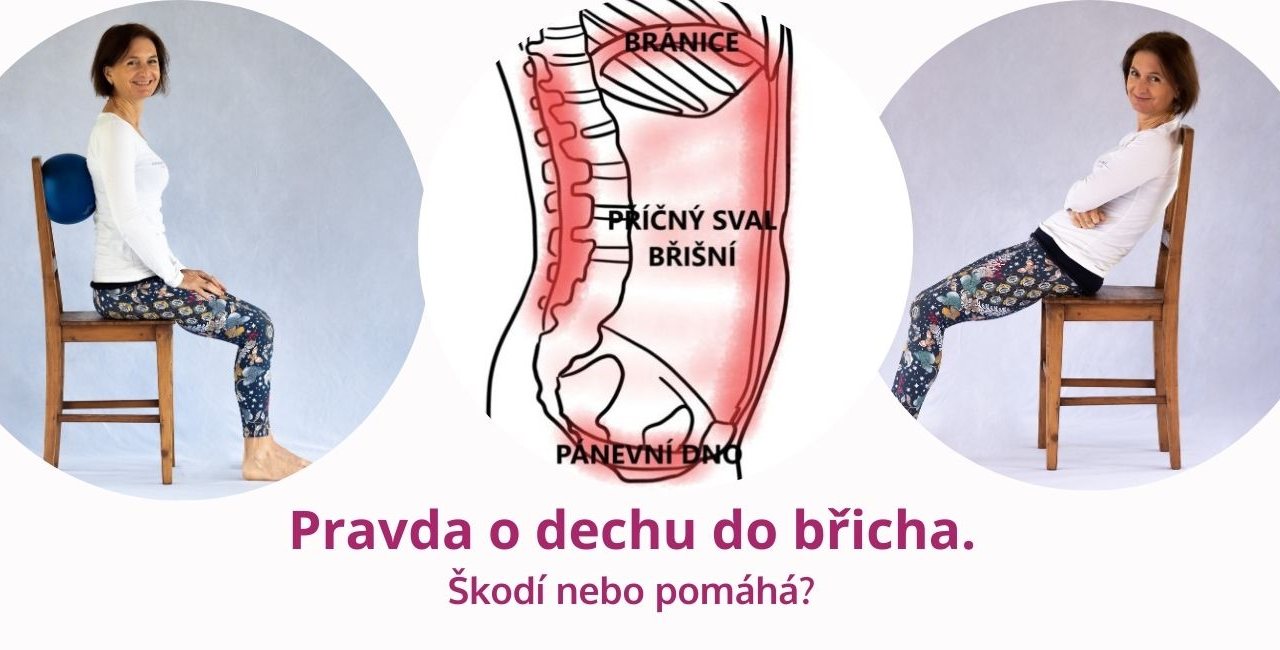
It’s a scenario I see all too often: a client comes to me with back pain and tells me that during physical therapy, they were taught to breathe into their belly.
But does this common advice actually help, or could it be part of the problem?
How Are You Sitting Right Now? Where Is Your Breath Going?
When a new client walks in and describes their situation, I often observe them breathing directly into their abdomen. They are typically sitting slumped, with their rib cage collapsed into their belly. In this position, the breath naturally flows to the path of least resistance. A relaxed abdomen offers far less resistance than a stiff, collapsed rib cage with a compressed diaphragm.

Consider these common examples:
- A postpartum woman often has a weakened abdominal wall and a stiff chest, causing her breath to push into the already weakened abdomen.
- Some clients are overly upright, with the area between their shoulder blades excessively tight. Their breath lifts their chest toward their chin, causing their lower back to tense up.
- The abdominal walls and backs of athletes and fitness enthusiasts are often too rigid and inelastic.
So, does training the breath to go into the belly make sense in these cases? Or is there a better way?
The key here is appropriate elasticity. Not too much, not too little—just right. Our primary goal is to achieve balanced tissue tension.
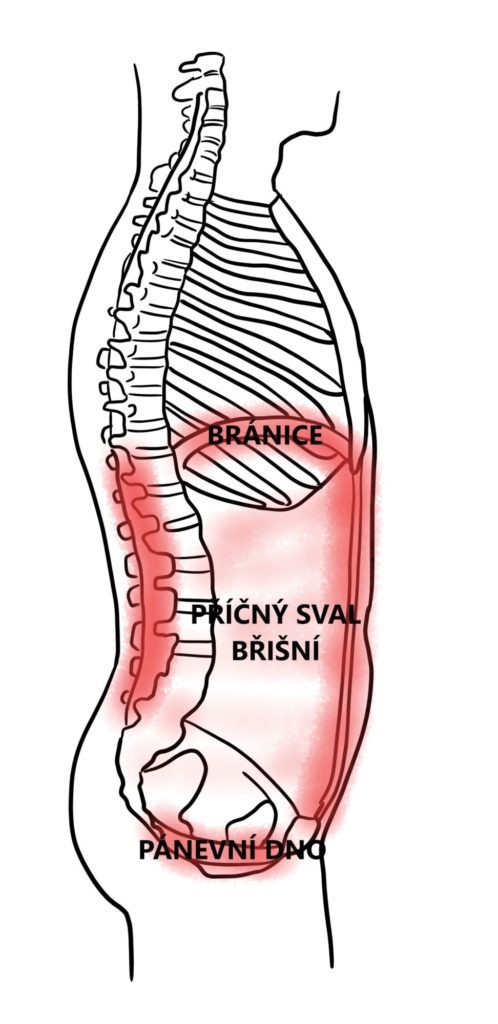
The abdominal wall needs a certain amount of tone. It provides crucial stabilization for the lumbar spine, which, unlike the thoracic spine, isn't protected by a rib cage. To give the lower back the support it needs, we must engage our abdominal wall. And remember, your abdomen isn't just at the front; it wraps all the way around to your spine.
The True Mechanics of a Functional Breath
Our lungs are in the chest. That's where we breathe. But for air to get into the lungs, the rib cage needs to be elastic. It must expand in all directions like an accordion while the diaphragm moves down. This creates negative pressure in the chest, allowing air to be drawn into the lungs. Without this movement, proper breathing is impossible.
This brings us to the origin of the "belly breathing" concept.
When the diaphragm descends to draw air into the lungs, it increases the pressure within the abdominal cavity. It's this pressurization that is key.
If the body is properly aligned—with the rib cage positioned over the pelvis—the diaphragm can descend toward the pelvis and create even, uniform pressure throughout the abdominal wall. This is the crucial detail: the pressure must be uniform!
When the abdominal cavity functions correctly (without pressure "leaking" like air from a punctured tire), this internal pressure stabilizes the lumbar spine from the front. In contrast, breathing in a way that just pushes the belly forward (as if you were pregnant) actually leads to compression and instability in the lumbar spine.
Of course, the amount of pressure matters. It should be appropriate for the load or activity.
- Too much pressure weakens the pelvic floor.
- Too little pressure leaves the lumbar spine unsupported and weak.
However, in a slumped body, the diaphragm often lacks the proper conditions to function effectively and becomes "lazy." It can no longer act like a piston, moving up and down with each breath.
The Connection Between Breath and Your Upper Body
A functional breath supplies all of our cells with oxygen. When breathing is insufficient, tissues become deprived of oxygen and grow stiff. The breath also carries the weight of our shoulders and cervical spine.
How many people today suffer from issues with their trapezius muscles and neck pain? A great many. The culprit is often poor posture, a rigid chest, and dysfunctional breathing.
So, the next time someone tells you to breathe into your belly, remember this article and think of your body as an integrated whole.
What a Healthy Breath Looks and Feels Like
A truly functional breath is three-dimensional and involves the entire torso.
- On the inhale, the rib cage gently expands in all directions. You should feel it expand upward under the collarbones, backward between the shoulder blades, and outward as the shoulders widen. The lower back ribs open, and the solar plexus area expands. You can even feel the breath in your lumbar spine as the individual vertebrae gently separate. The abdominal wall remains appropriately elastic, and the pelvic floor gently descends.
- On the exhale, the diaphragm returns upward, the pelvic floor rises, the abdominal wall gently returns and tones, and the ribs contract. After the exhale, the next inhale naturally follows.
Are You Living in Inhalation or Exhalation?
How is the quality of your breath?
Does this make sense to you? Every body is different. Each person has a unique posture and tissue quality, with some areas being too stiff and others too loose. Balanced tension and tissue elasticity are the keys to a body that moves freely and without pain.
Learn more about the connections between the Body and Breath HERE >>>
If you feel your body needs a complete reset, I created the online course Restart Your Body and Restart Your Body PREMIUM just for you.
<a href="https://martinafallerova.cz/restart-faspo/">
<img src="images/8-1024x576.jpg" alt="Promotional banner for the Restart Your Body online course.">
</a>
<a href="https://martinafallerova.cz/faspo/restat-premium/">
<img src="images/7-1024x576.jpg" alt="Promotional banner for the Restart Your Body PREMIUM online course.">
</a>Tags
#back pain#breathing techniques#diaphragmatic breathing#posture#core stability#pelvic floor