Heel & Achilles PainBack PainDiastasis RectiFasciaKnee HealthHip HealthMovement EducationHealthy Movement
Fascia: The Hidden Key to a Pain-Free Life You Never Knew You Had
26. března 2025
8 min read
Updated 4. 6. 2026
MF
Martina Fallerová
Movement & Wellness Expert
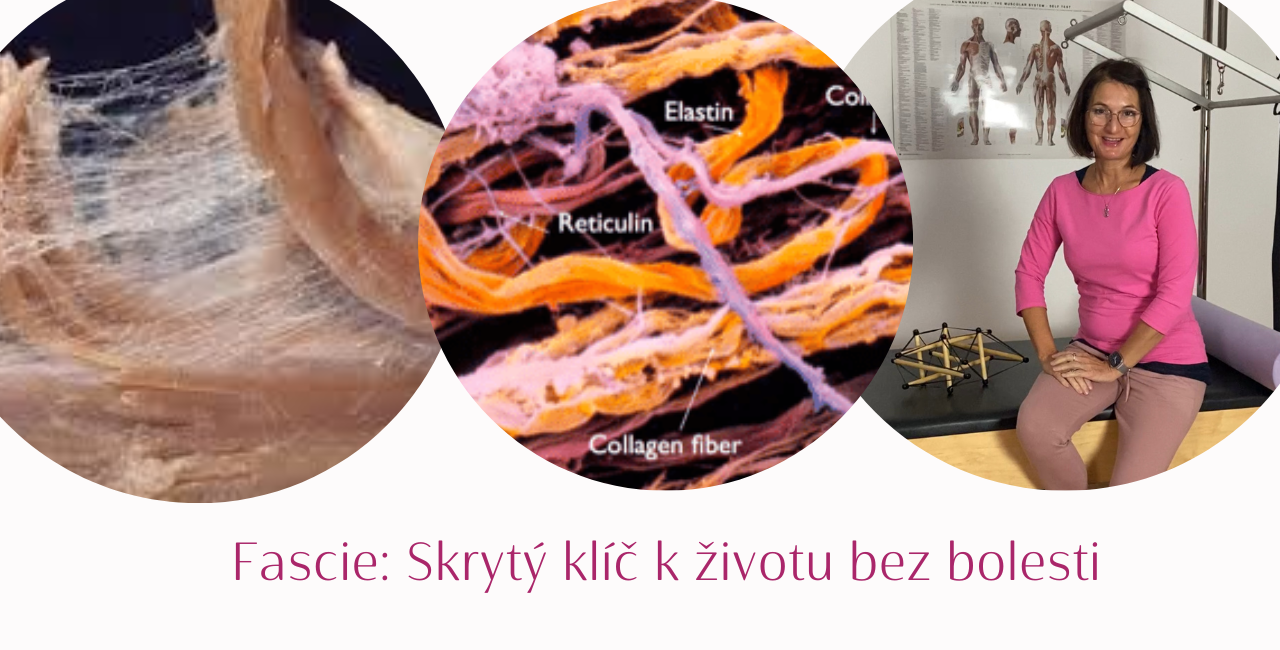
Fascia is the key to the health of your musculoskeletal system, yet most people have never even heard of it.
Do you suffer from back, shoulder, knee, or hip pain without knowing why?
The cause may lie in the dysfunction of your fascial tissue, which connects your entire body from head to toe. For a long time, modern anatomy dismissed fascia as insignificant "packing material," but the latest research shows that fascia plays a crucial role in movement, stability, and the transmission of forces throughout the human body. In this article, I'll explain what fascia is, how it affects your health, and most importantly, how to care for it to prevent pain and improve your movement.
Fascia: The Anatomical Discovery Changing Our View of the Human Body
Are you struggling with chronic back, knee, or shoulder pain? You may have already tried various treatments without long-term success.
The real cause of your problems may not be where you feel the pain, but in your fascia—the vast network of connective tissue that surrounds and permeates every muscle, bone, nerve, and organ. Fascia makes up to 20% of your body weight, but until recently, it was overlooked in anatomy as mere "packing tissue." However, the latest research reveals that fascia is so much more:
- It forms a 3D spatial network that maintains the body's shape and integrity.
- It contains more sensory receptors than muscles and is crucial for proprioception (your sense of movement) and pain perception.
- It actively responds to mechanical load by changing its stiffness.
When you understand how fascia works, you gain a new perspective on your body and find the key to solving many movement-related problems.
Fascia is primarily composed of collagen and elastin fibers, which form a web-like structure similar to a spatial matrix. This structure is incredibly strong (fascia has a higher tensile strength than steel!) yet flexible and adaptable. Fascia functions as a "biotensegrity" system that holds our body together and allows it to withstand gravity and impact.
How Fascia Influences Pain and Movement
Do you often experience lower back pain? The cause might be a disruption in a key fascial structure—the thoracolumbar fascia.
The thoracolumbar fascia is a strong ligamentous band that connects the lower back with the pelvis and limbs. When this fascia becomes overloaded or adhered ("stuck"), it can cause pain throughout the lower back, buttocks, and the back of the thighs. Interestingly, the true source of the pain is often not where you feel it. Because of the interconnected nature of fascia, tension and dysfunction can be transmitted to distant areas of the body:
- Headaches can be related to shortened fascia in the neck, shoulders, and even the hamstrings.
- Knee pain often stems from fascial dysfunction in the thighs.
- Heel pain can be caused by adhered fascia on the back of the lower legs or a collapsed foot arch.
That's why it's crucial not to overlook fascia and to view the body as an interconnected whole when addressing musculoskeletal issues.
This approach can also explain the discrepancies between symptoms and objective medical findings. For instance, results from X-rays or MRIs often don't correspond to the intensity of pain a person feels. This is because these imaging methods don't show the condition of soft tissues, including fascia. Changes in the fascia, such as a loss of glide between its layers or the formation of active trigger points, can cause significant problems without being visible on scans.
Fascia and Modern Lifestyles: A Toxic Relationship
Do you exercise regularly and eat well, but still suffer from stiffness and pain? Your lifestyle might be to blame.
The modern way of life is literally toxic for our fascia. A predominance of sedentary activities, a lack of natural movement, and chronic stress all negatively affect the condition of our fascial tissue. Fascia responds to mechanical load—it needs regular movement and stretching to stay healthy and functional. When we don't move, fascia gradually stiffens, sticks together, and loses its elasticity. Trigger points and areas of increased tension develop, leading to restricted movement and pain.
- Incorporate more dynamic movement into your day, alternating between muscle contraction and stretching.
- Avoid long periods of static sitting or standing by taking regular breaks.
- Find a moment each day to stretch shortened fascia and focus on its hydration and detoxification through stretching and self-massage techniques.
In addition to a sedentary lifestyle, chronic stress is another major enemy of fascia.
Research shows that fascia contains a high number of receptors for stress hormones. When we are stressed, our fascia contracts and tightens, as if preparing for an attack. If the stress is prolonged, this increased tension becomes fixed, and the fascia loses its adaptability. Therefore, to keep your fascia healthy, it's important not only to exercise regularly but also to relax and learn to manage stress.
Interestingly, fascial dysfunction can, in turn, worsen stress and anxiety.
Fascia plays a key role in our perception of our body and emotions. When fascia is overloaded and stiff, the brain receives threat signals and triggers a stress response. This creates a vicious cycle where stress causes changes in the fascia, and those changes in the fascia increase stress. Conscious work with fascia through self-massage, breathing techniques, and body awareness can therefore significantly contribute to your mental well-being.
Water: The Elixir of Life for Your Fascia
Fascia is largely made of water—it constitutes up to 70% of its volume. Water is absolutely vital for fascia. It keeps it supple and allows its layers to glide smoothly past one another, acting as a lubricant. When we hydrate our fascia, we improve its ability to absorb shock and transmit force and information. Conversely, dehydrated fascia is stiffer and more prone to overload and pain.
- Drink pure water regularly. Aim for at least 30 ml per kg (or about 0.5 oz per lb) of body weight.
- Replenish fluids during and after exercise, when water is lost from the fascia.
- Enjoy an occasional glass of water with lemon or a pinch of Himalayan salt for better absorption.
Hyaluronic acid plays a key role in fascia hydration.
This substance, which our body produces naturally, is present in the matrix of fascial tissue. It acts like a sponge, binding water and keeping it within the tissues. However, with age and the effects of a poor lifestyle, the amount of hyaluronic acid in the body decreases. Fortunately, we can supplement it from external sources.
Movement is another crucial factor for hydrating your fascia.
When we move, fascia is "squeezed" like a sponge, releasing excess water and toxins from the body. At the same time, fresh, nutrient-rich fluid is drawn in. Regular movement thus supports metabolic exchange and cleansing of the fascia, much like self-massage and Rolfing techniques.
The key to success is gradual progress and consistency. Stiff and adhered fascia needs time and patience to release.
One of the most effective self-massage tools is a foam roller. Rolling helps release tension in muscles and connective tissues, improving blood flow and lymphatic drainage. When you foam roll, you're essentially using your body weight to "squeeze out" adhered layers of fascia and release trigger points. It can be a bit painful at first, but with regular practice, the sensitivity decreases. You can start the right way with my guide on How to Release, Hydrate, and Detoxify Muscles and Fascia with a Foam Roller, Spiky Ball, or Tennis Ball. (Note: This linked resource is in Czech).
A New Perspective on Musculoskeletal Health
Fascia is the true connective tissue between our physical and mental health. Its condition reflects not only how we move but also how we live and think.
Chronic pain and limited mobility are often the result of unconsciously mistreating our fascia—years of overuse, one-sided movements, and suppressed stress. Once we learn to perceive fascia as a sensitive and responsive tissue that reacts to every stimulus, we can begin to treat it with greater care and respect.
My wish is for awareness of fascia to spread to all areas of healthcare and daily life, becoming a natural part of our culture of body, movement, and health.
Fascia has so much to tell us; we just need to learn to listen. Let's start today—give your fascia the touch of kind attention, grant it healing movement, and allow it to regenerate. You will see it reward you with a feeling of lightness, flexibility, and the joy of natural movement.
I am incredibly grateful to be able to share this knowledge with you and guide you on the path to a new understanding of your own body. If the topic of fascia has captured your interest and you'd like to explore it in depth, I invite you to my free practical online lecture, OD BOLESTI K RADOSTI (From Pain to Joy).
May your journey with fascia be full of discovery, joy, and health!
Martina Fallerová
Wishing you beautiful days filled with movement and free of pain,
Martina
Martina
Tags
#knee pain#hip pain#shoulder pain#back pain#fascia#hypermobility#plantar fasciitis