Back PainFasciaIncontinencePelvic FloorMovement EducationHealthy Movement
Hypermobility Under Control: How to Be Strong, Stable, and Pain-Free
23. března 2025
6 min read
Updated 4. 6. 2026
MF
Martina Fallerová
Movement & Wellness Expert
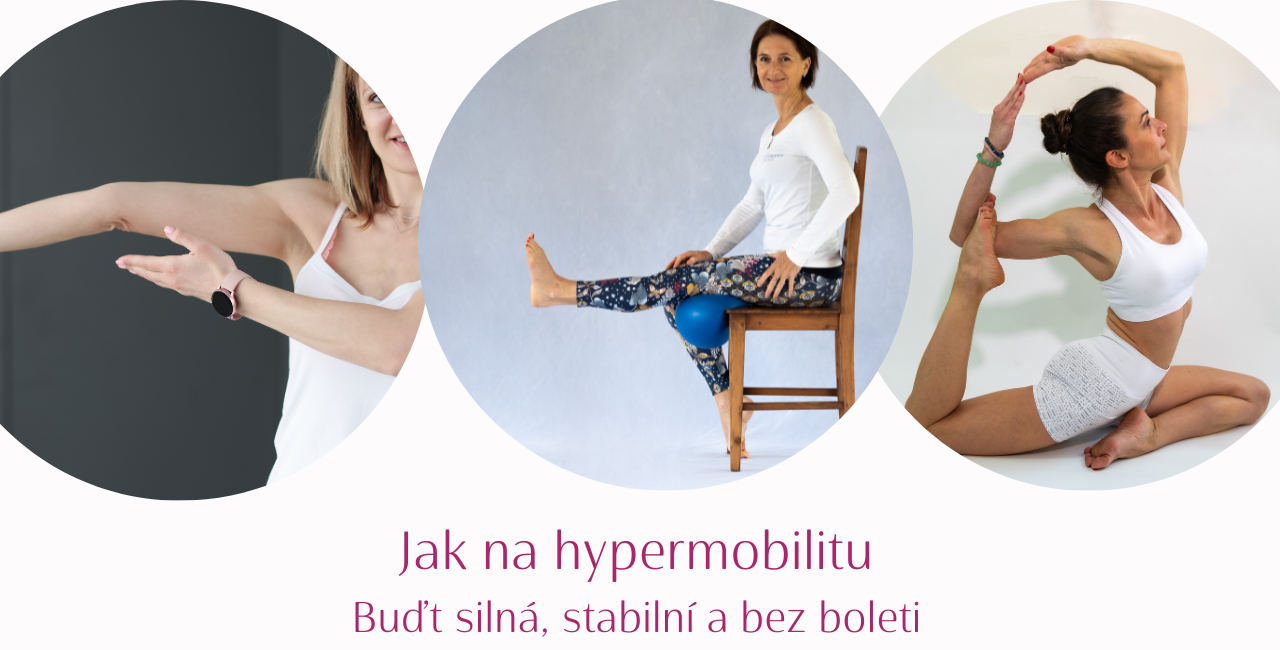
Are you extremely flexible, but instead of feeling strong, you experience more pain and instability? Hypermobility isn't a gift if you don't know how to properly support it. I'll show you how to gain stability, strength, and finally feel good in your own body.
Hypermobility is a topic I've been asked about a lot lately. It seems we're living in a time with a growing number of hypermobile people, a subject that often comes up in various training sessions I attend. Who knows the exact cause—perhaps it's the hormones that surround us in modern life.
What is Hypermobility?
Hypermobility is defined as an excessive range of motion in the joints, extending beyond the typical norm. This condition can lead to pain, fatigue, and a higher frequency of injuries.
How to Think About Hypermobility
Even hypermobile people have stiff spots. This leads to a common question I hear: "If I'm hypermobile, can I still use self-massage techniques?"
My answer is a resounding yes. Self-massage techniques are excellent because even hypermobile individuals have tight and sore areas. However, it's crucial to use them in a somewhat limited and specific way.
Hypermobility and Fascia
Fascia: Your Body's Inner Support System
Do you feel like your body needs more internal support?
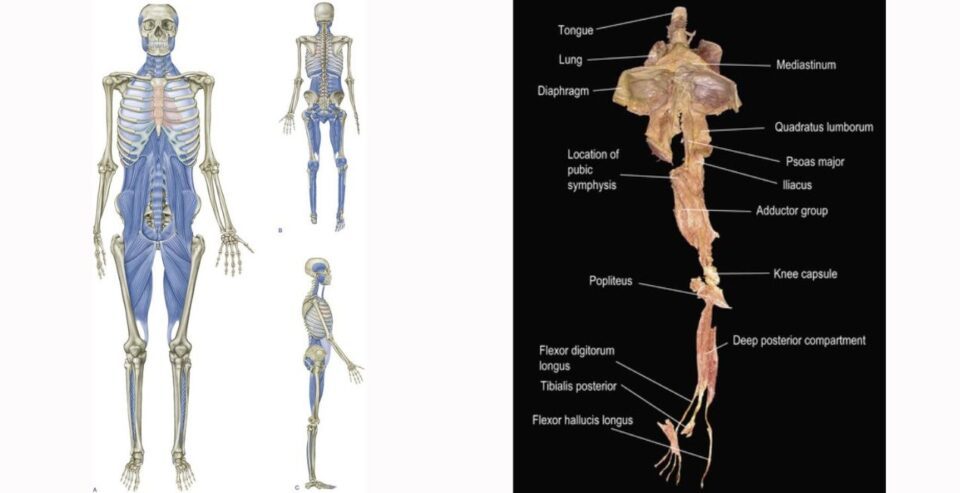
Fascia consists of dense layers of connective tissue that wrap around and connect muscles, bones, organs—essentially everything in your body. It forms a 3D network that gives your body its shape and holds it together. The higher the quality of these fibers, the better the support for your joints and muscles.
In hypermobile people, the fascia is often weakened or overstretched in certain areas. This can lead to chain reactions and transfer tension to distant parts of the body. Studies show that hypermobile individuals have an altered collagen structure in their fascia, which can result in reduced support and stability.
This is why caring for your fascia is so important, especially when you're hypermobile.
So, how can you strengthen your fascia? Here are a few proven tips:

- Incorporate slow, fluid movements with added resistance.
- Use tools like foam rollers or massage balls for activation and stimulation, not deep release.
- Limit your stretching to about 70% of your full range of motion.
- Focus more on complex movements, strength, and stability.
- Avoid "hanging" in your joints during the day—change your movement habits.
Learn more about hypermobility and the fascial network HERE.
Self-Massage Techniques for Hypermobile Individuals
You can use self-massage tools like a foam roller, spiky ball, or tennis ball to activate your tissue. This means:
- You can take a spiky ball or tennis ball and activate tissue with tapping or a quick massage.
- Use stimulation in a way that activates the tissue.
- Move the spiky ball or tennis ball quickly over your body, similar to how you would use a dry brush.
- The goal is to increase blood flow and activate the tissue, not to stretch it to its maximum.
It is vital not to push your joints to their maximum range of motion during any movement. This applies to yoga and any other sport.
The Yoga and Hypermobility Paradox

It's an interesting paradox that yoga classes are often filled with hypermobile women, who might actually benefit more from going to the gym. For hypermobile individuals, it's crucial to:
- Treat yoga poses as strength training.
- Actively hold the poses instead of just hanging in them.
- When practicing, you should have a feeling of stability, as if you were standing firm in a strong wind.
- If someone were to walk by and gently push you, you should be able to hold your ground.
There's no need to push your joints to their maximum—on the contrary, it's better to leave some room for movement, going only to about 70% of your range and holding the position with muscular strength. Therefore, it is important to:
- Focus more on strengthening.
- Pay more attention to protein in your diet.
- Prioritize muscle activation.
How Water Temperature Affects a Hypermobile Body
Stimulation with slightly cooler water is also beneficial. Avoid hot water, which tends to loosen all connective tissue.

As for cold exposure (or cold plunging)—personally, I can't do it. I had to stop because it didn't agree with me. It felt good in the moment, but later, health problems appeared that I wouldn't have initially connected to it, such as a watery eye, which was actually caused by internal coldness in the body.
So, not every body type is suited for cold exposure. Those who have a lot of "fire" will find it a clear choice. But for other types, it's not suitable.
For hypermobile people, a lukewarm shower is better than a hot one. The same applies to hot baths and tubs—they tend to promote hypermobility.
The situation in a sauna is different because it's balanced. You go from heat into cold water, which causes the tissue to contract.
Traditional Chinese Medicine and Hypermobility
My friend Jana Dedková, a Traditional Chinese Medicine (TCM) therapist, wrote an article HERE that offers a TCM perspective and explains how it can help manage hypermobility to prevent it from causing "major havoc" over a lifetime.
Women often suffer from Liver Blood Deficiency. This is logical, considering women lose blood throughout their lives due to menstruation and childbirth. Typical signs include a pale complexion, a pale tongue, and feeling cold. Often, blood tests will confirm a real deficit—low levels of iron, hemoglobin, hematocrit, or even red blood cells.
The second common reason that can make living with hypermobility very unpleasant is a deficiency in the Spleen channel, which, in TCM terms, "fails to create flesh." Translated into everyday language, this means these individuals find it nearly impossible to build muscle mass.
They often struggle in the gym with little to no results. Accompanying symptoms usually include fatigue, feeling cold, and mushy stools. You can find more in her article HERE.
Tags
#knee pain#hip pain#shoulder pain#back pain#fascia#hypermobility#movement habits