Back PainDiastasis RectiFasciaGait TrainingShoulder HealthMovement EducationHealthy Movement
Suffer from Back and Joint Pain? 9 Reasons to Focus on Your Fascia
14. května 2020
6 min read
Updated 4. 6. 2026
MF
Martina Fallerová
Movement & Wellness Expert
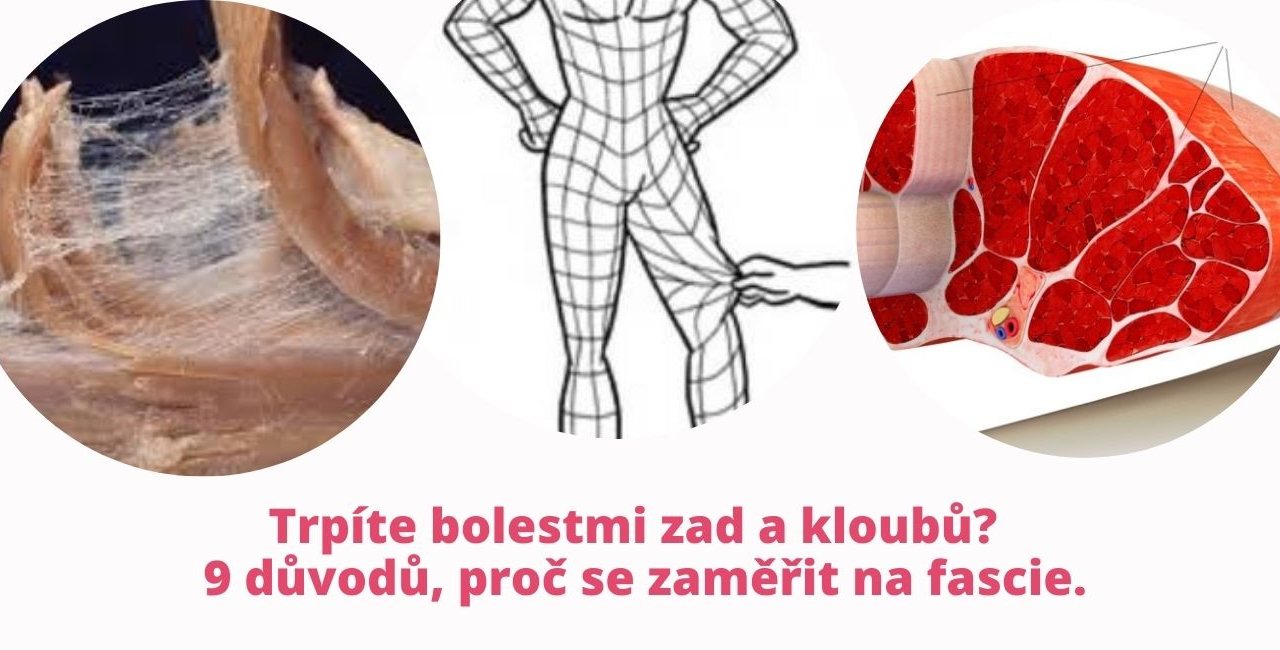
Are you struggling with discomfort in your spine or joints? Here are nine powerful reasons why you should start paying attention to the fascial network within your body.
I can't think of a single person I know who hasn't experienced unpleasant sensations in their back or limbs. As a movement specialist, I deal with these issues every day. Most of my clients are busy professionals, and my job is to find the most effective ways to relieve their discomfort, allowing them to focus fully on their work and get back to the sports and activities they love.
I teach them proper posture, functional breathing, how to change ingrained movement patterns, and self-massage techniques.
Fascia: The Body's Long-Overlooked Organ
In traditional anatomy studies, we learned about bones, muscles, tendons, vessels, nerves, and internal organs as separate systems. However, with advancements in imaging technology, we've discovered a spatial organ that envelops, connects, adapts to stress, and permeates the entire body—from bone to skin, from the tips of your toes and fingers to the crown of your head. This connective tissue, long overlooked and considered insignificant filler, is called FASCIA.
Fascia as a Dynamic Organ
Fascia is a dynamic organ composed of cells, fibers, and intercellular fluid. The most well-known of these components are collagen fibers, elastin fibers, and hyaluronic acid. Fascia envelops every anatomical structure in the body. Blood vessels, nerves, bones, muscles, individual muscle bundles, and even internal organs are wrapped in this connective tissue and anchored to our bones. This means that this tissue forms an extensive, three-dimensional network throughout our organism, ensuring that everything holds together while still being able to move and glide against each other.
1. Fascia as a Stabilizing Organ
Fascia functions like the canvas of a tent in our body. For maximum strength and stability, every part must be evenly tensioned and distributed. The strength and stability of our organism depend on this principle. Even the muscular system is built upon a fascial foundation. It is the fascia that maintains the stability and function of our joints. Muscles are the driving force of a joint, but the coordination of movement depends on the functionality of the fascia.
2. Fascia Supports Organs, Vessels, and Nerves
Internal organs maintain their shape and are attached to bones by fascia, which also provides support for the nervous, vascular, venous, and lymphatic systems. Fascia creates a pumping force that aids in the return of blood and lymph. Healthy fascia pulses at a frequency of 8–12 cycles per minute.
3. The Structure of Fascia
The arrangement of fascial fibers follows a spiral-like structure, resembling the mesh bag that papaya is often sold in. When these fibers contract, they compress the structures they surround, squeezing fluids back toward the heart, much like wringing out a cloth. However, if this connective tissue is under abnormal tension, the muscular and vascular systems are constantly compressed, leading to improper muscle function and poor circulation.
4. Fascia is Adaptive
Fascia contains important cells that allow it to adapt to different situations. Depending on the body's needs, these cells produce more lubricant or more fibers. Under intense, prolonged stress, lack of movement, or poor posture, the cells produce too little lubricant (hyaluronic acid). As a result, the fascia stiffens, and its individual layers begin to stick together. Since this connective tissue permeates our entire body like a 3D web, these "stuck" spots can cause discomfort throughout the entire musculoskeletal system. Chronic overloading can lead to inflammation, and exposed areas may protect themselves by transforming into bone tissue and calcifying. This process often occurs around a bunion, heel bone (heel spur), elbow, shoulder, or spine.
5. Fascia as a Shock Absorber
When healthy and functional, fascia also acts as a shock absorber due to its high water content. It can absorb a certain amount of energy, protecting our muscles, organs, and their structures from overload. If the fascia becomes dehydrated, it loses this ability, which may be one reason why our body creates protective layers of fat tissue in these areas.
6. Fascia and the Aging Process
The elasticity of fascia decreases with age, causing the fibers to thicken, shorten, and calcify. This is why we can start to feel like we are moving through stiff, crystallized honey. Movement then requires much more energy, forcing our muscles to work at maximum capacity, which leads to overload.
7. Fascia and the Nervous System
Up to 80% of our body's nerve endings are located in the fascia. Tight, dehydrated, or weakened fascia that lacks lubrication can be a primary source of unpleasant sensations and pain. In "stuck" or adhered fascia, these nerve endings become overly irritated.
8. Fascia as a Kinetic Energy Accumulator
When elastic, fascia also has the ability to store kinetic energy, which it then uses for a "catapult effect." If you want to shoot an arrow as far as possible, you need a quality bow; you pull the bowstring back, and the arrow flies a great distance. Our body uses the same principle for jumping. The bowstring is our Achilles tendon, and the arrow is our heel bone. Therefore, a better jumper is someone whose calf muscle bellies are shorter than their tendon.
9. Fascia as a Sensory Organ
Fascia is also a massive sensory organ. We don't need to see our arm or foot to know its exact position in space. This sense, known as proprioception, means that proper coordination of movement is directly dependent on the quality of our fascia.
These are at least nine reasons to start taking care of your fascia. In individuals with chronic discomfort, fascia often looks and feels like crystallized honey. Everything is stuck together, lacking glide and hydration. We should focus on movements that lengthen and stretch in all directions, releasing layers from each other, and improving elasticity and hydration.
Research and advanced imaging techniques have shown that specialized massage techniques can break down old collagen, allowing the old tissue to be replaced by new, better-hydrated, and more pliable tissue. Because connective tissue contains a lot of water, pressure from massage expels old fluid; upon release, the tissue draws in a greater amount of fresh, filtered water.
On a molecular level, the pressure applied during a massage causes the large chains of hyaluronic acid between fascial layers to expand their surface area, enabling them to bind more water.
Of course, many of us lack the time and money for regular massages. Furthermore, skilled therapists who specialize in myofascial techniques are hard to find. However, you can use various types of foam rollers, massage balls, and other self-massage tools. Just be sure to learn the correct techniques only from reputable experts.
I have trained many such professionals myself during the seven years I was involved in training Pilates instructors and leading specialized seminars at the IQ Movement Academy. I have also compiled all of this knowledge into my e-book, "How to Release, Hydrate, and Detoxify Muscles and Fascia with a Foam Roller, Spiky Balls, and Tennis Balls," and filmed it for my online course, "Restart Your Body," and the "Foam Roller" online library.
Tags
#knee pain#shoulder pain#back pain#fascia#plantar fasciitis