Back PainFasciaFunctional CoreKnee HealthHip Health
How to Enjoy Skiing Without Back and Joint Pain
26. února 2025
6 min read
Updated 4. 6. 2026
MF
Martina Fallerová
Movement & Wellness Expert
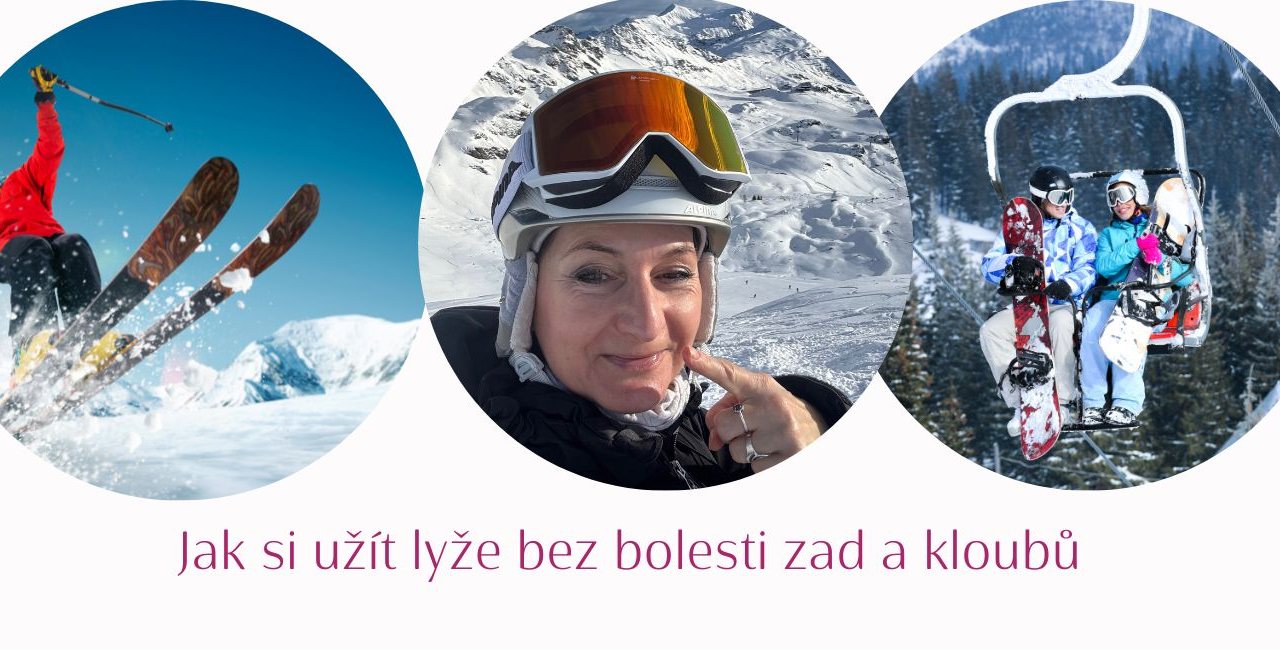
Do you love to ski but struggle with back, hip, knee, or trapezius pain on the slopes? If so, I wrote this article just for you.
Why Do Your Calves Hurt After Skiing?
Throughout a day of skiing, your calves are constricted inside ski boots. This prevents the natural foot movement you experience while walking, where the calf and Achilles tendon constantly lengthen, contract, and allow different layers of tissue to glide past each other. That's why it's essential to release and stretch this area after you're done on the mountain.
Incorrect skiing technique can also be a culprit, forcing your calves to work harder than they should. This can happen if your body weight is shifted too far back onto your heels. When this happens, you aren't pressing into the front of your boots; instead, you're leaning back, overworking your calf muscles.
What's Causing Your Knee Pain While Skiing?
Are Your Lower Body Muscles and Fascia Stiff, Inelastic, or Shortened?
When you bend, stiff tissues can create excessive tension on the attachments around your knees. The receptors in your tendons detect this high level of tension and signal pain. Furthermore, shortened muscles reduce the space within the joint, which can lead to accelerated cartilage wear.
So, what's the solution? It's simple. Proper self-massage Rolfing techniques can help you release this tension. Follow that with a good stretch, and you're set. But why isn't stretching alone enough? Because stretching is only effective in areas that are already elastic. It can't reach the parts that are stiff or adhered together. Additionally, the fascial network, which envelops everything in your body, has a different structure and orientation than muscle fibers. This means we need a different strategy than just simple stretching. You can learn all about this in the e-book How to Address Your Feet, Knees, and Hips - Learn to Walk or in the online course RESTART YOUR BODY.
Poor Lower Limb Alignment
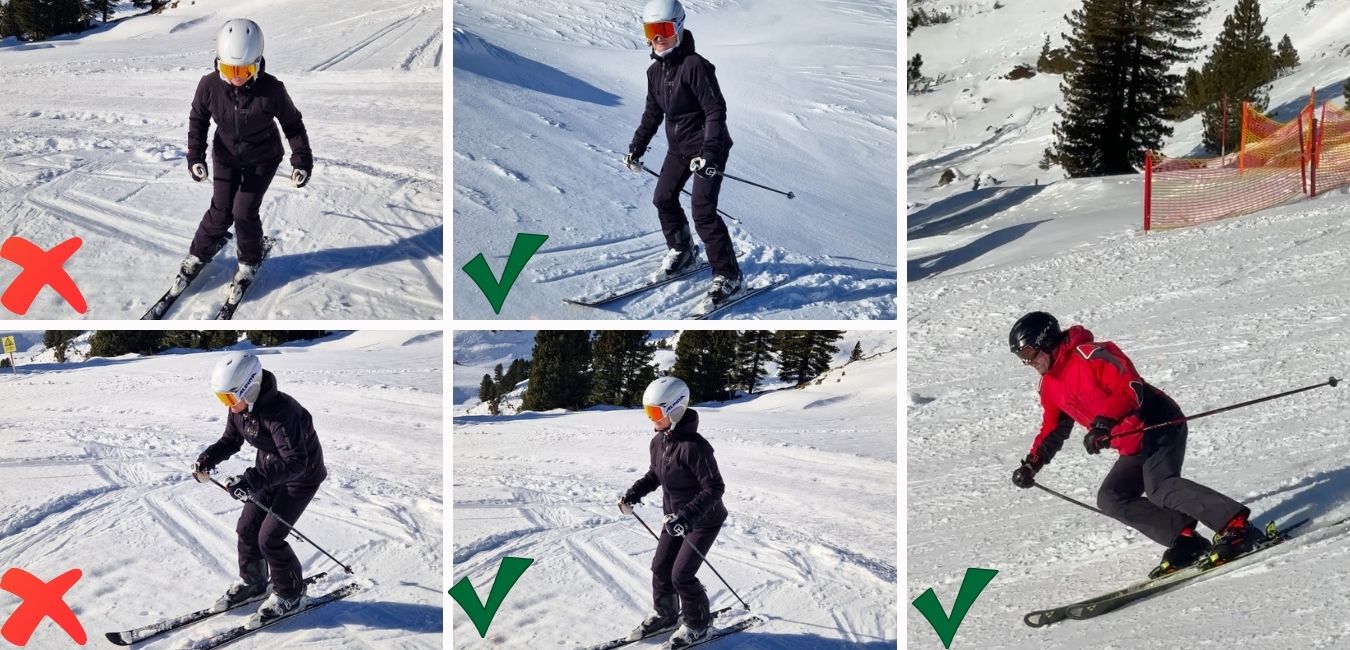
While skiing, if you don't maintain the proper lower limb axis—an alignment from your 2nd toe, through your knee, to your hip—your knee can become misaligned. This leads to greater tension on specific attachments and increased wear on your cartilage. In some areas, the cartilage gets compressed more than others, hindering its ability to regenerate. It dries out and begins to break down. I explain these connections in more detail in my free practical lecture HERE.
Incorrect Skiing Technique
Poor technique could also be the problem. If you're not working with alternating pressure between the little-toe and big-toe edges of your foot and are instead transferring that movement into your knees, you create excessive tension on the attachments, leading to misalignment and decentration.
Non-Functional Knee Attachments
For your knee to function correctly, it needs to be stable, and this stability is provided by the functional attachments surrounding it. However, I often see that these attachments aren't working for many people. They don't know how to activate them. This isn't about having strong thighs; it's about having functional attachments around the knee. How do you activate them? This is covered in both the How to Address Your Feet, Knees, and Hips e-book and the RESTART YOUR BODY online course.
If you're dealing with knee pain, you might also want to read my article detailing an effective strategy for resolving knee issues. You can find the full article HERE.
Hip and Back Pain During Skiing
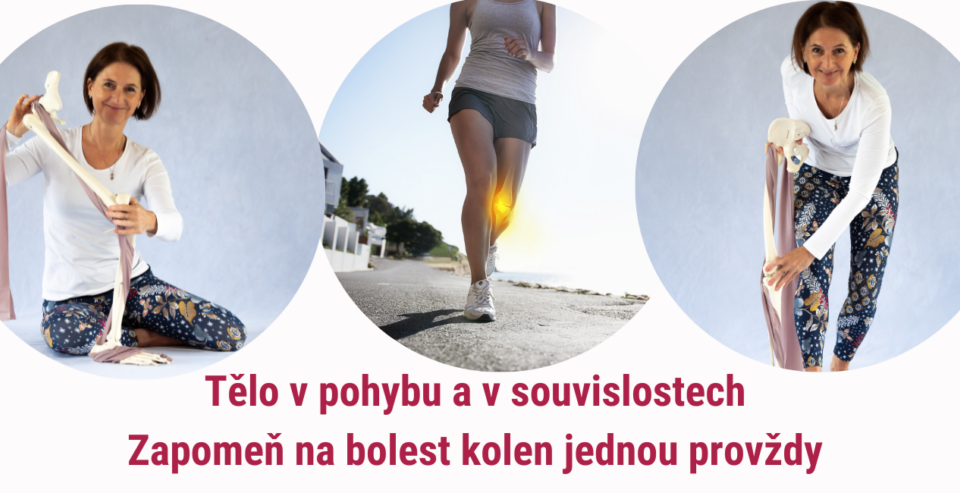
These two areas are interconnected and influence each other. A sedentary lifestyle often leads to tight hip joints and restricted movement. As a result, when you bend, the movement of your pelvis doesn't happen through the hip joints but in the lumbar spine. This places greater strain on your lower back, and eventually, the receptors signal that it's too much.
Tightness in the hip joints can also irritate and pull on the sciatic nerve, which runs through the external rotators of the hips.
Sufficiently mobile hip joints allow for rotational movement of the pelvis over the head of the femur. This lets the spine remain in its natural alignment, where the core muscles can function properly to protect it. If your spine is rounded, this muscular protection is lost.
The solution? Once again, you need to release the fascial and muscle structures of the hip joint. This will allow you to maintain an upright spine and an active, functional core even while skiing.
Do Your Trapezius and Neck Muscles Hurt While Skiing?
Your head needs to look forward and will always adapt to the segments below it, reacting to their alignment. Therefore, if your spine is not properly aligned, it affects the position of your shoulder blades, which in turn impacts your trapezius muscles and cervical spine.
Imagine this: even the way you grip your ski poles influences the position of your shoulder blades and the tension in your trapezius muscles. A power grip uses the pinky and the next two fingers. This grip creates a kinetic chain that leads to an open shoulder position and engages the lower fixators of the shoulder blades.
However, if you grip the pole forcefully with your thumb and index finger, the chain reaction travels more toward the front of the shoulder and the pectoral muscle, which pulls the shoulder blade forward and increases tension in the trapezius muscles. The thumb and index finger are designed for fine motor skills, not for generating power. I talk more about this in the video below.
This video is part of the free e-book: FIND OUT WHY YOUR TRAPEZIUS MUSCLES AND CERVICAL SPINE HURT. You can download it HERE.
How Do You Breathe While Skiing or Exercising?
Yes, even how you breathe and the position of your tongue have a significant impact on your body. These factors influence whether:
- Your cells receive enough oxygen.
- Your muscles are becoming unnecessarily tight due to your breathing pattern.
- Your fascia is sufficiently hydrated.
- You feel warmer.
- Your core is functioning correctly to protect your spine.
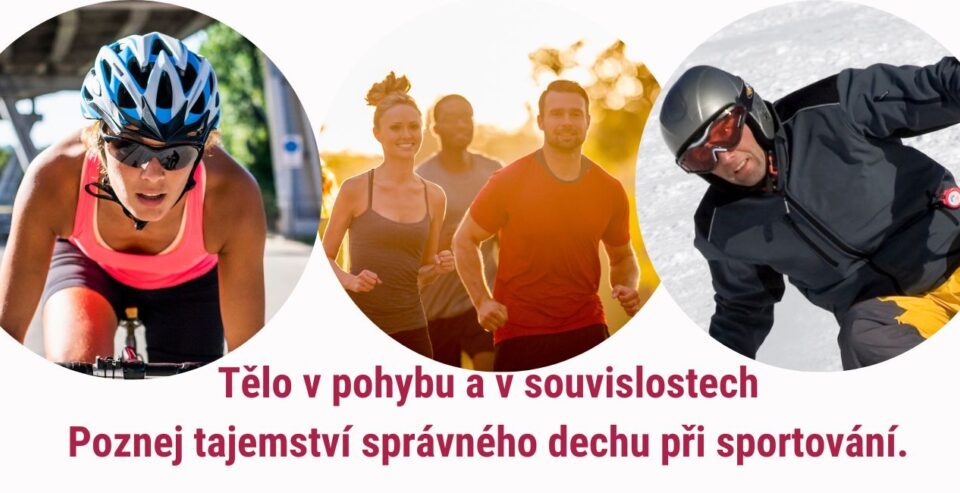
I write about functional breathing during sports in my article DISCOVER THE SECRET TO PROPER BREATHING DURING SPORTS HERE.
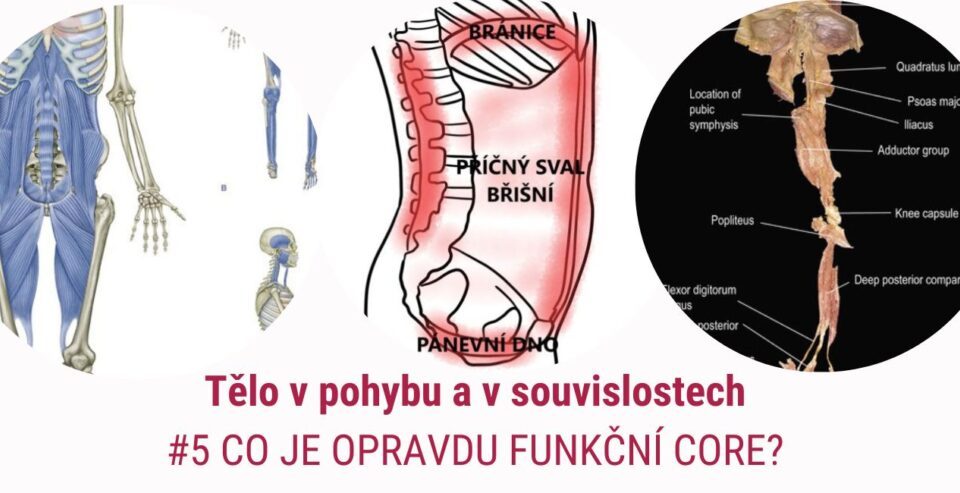
You can read more about what a truly functional core is and why tongue position is so important in this article HERE.
Tags
#knee pain#hip pain#shoulder pain#back pain#fascia