Back PainFasciaHealthy Movement
Fascial Hydration: Why It’s About More Than Just Drinking Water
18. dubna 2025
7 min read
Updated 4. 6. 2026
MF
Martina Fallerová
Movement & Wellness Expert
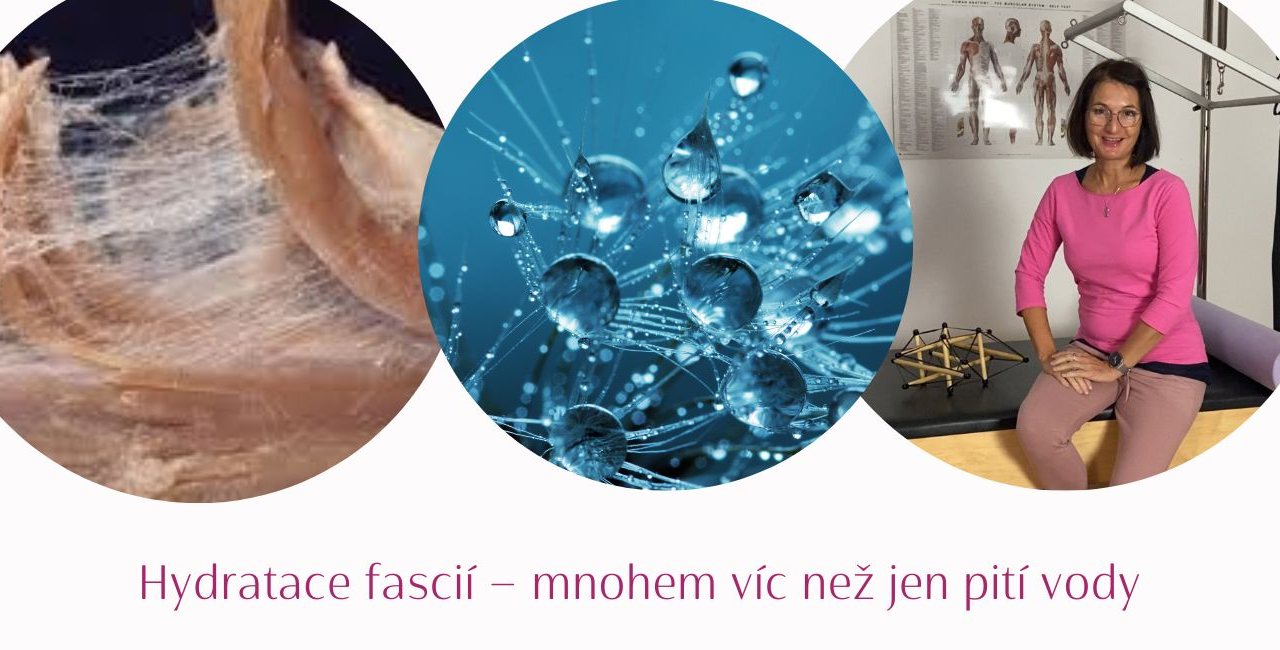
Hydration is often associated with simply drinking more water. But true hydration—especially when it comes to the fascia—is a much more dynamic process. The fascia, the living matrix that weaves through every organ, muscle, and nerve, doesn’t just soak up water like a sponge. It requires movement, glide, and interstitial flow to remain supple, responsive, and resilient.
Let's explore why fascial hydration is essential for our overall health and how movement—particularly fascial unwinding—nourishes our bodies on a deep, cellular level.
Understanding Fascial Hydration
Fascia isn't just a passive structure; it's a living, sensory network that supports movement, communication, and resilience. One of its most crucial functions is to maintain the body's hydration balance. Fascia possesses a viscoelastic property that allows it to glide and adapt to movement.
This gliding is largely dependent on hyaluronan, a molecule in the extracellular matrix that attracts and holds water. When the fascia is well-hydrated, it allows for smooth, effortless movement. When it becomes dehydrated, adhesions form, restricting mobility and causing stiffness, discomfort, and chronic pain.
According to fascia researcher Carla Stecco, hydration is key to maintaining the viscoelastic properties of fascia, allowing it to remain elastic and responsive (Stecco, 2015). She emphasizes that hyaluronan—a vital component of the extracellular matrix—acts as a lubricant between fascial layers, reducing friction and promoting glide. When hyaluronan dehydrates, the fascia becomes sticky and less adaptable, leading to stiffness and restricted movement.
Gerald Pollack's research on structured water further expands our understanding of hydration (Pollack, 2013). His work suggests that water in the body doesn't just move freely but can organize itself into a structured, gel-like state. This structured water plays a key role in cellular communication, energy storage, and hydration at a molecular level, providing the optimal environment for fascia to function effectively.
Why Fascia Dehydrates
Our modern lifestyles often limit the kind of fluid, three-dimensional movement that fascia craves. Prolonged sitting, repetitive motions, chronic stress, and a lack of movement variability can all lead to dehydration at the fascial level. Over time, this causes the fascia to become dry and rigid, creating areas where tissues adhere to each other and lose their glide. This can contribute to:
- Restricted range of motion
- Chronic tension and pain
- Decreased sensory awareness
- Increased susceptibility to injury
- Emotional and energetic stagnation
The Role of Movement in Hydration
The heart's movement is innate, but its efficiency in circulating blood depends on proper hydration. Just as all movements in the body depend on fascial hydration, the heart also benefits from a well-hydrated fascial system. The hydration of the fascia depends on movement, which facilitates the flow of fluids.
Movement creates the necessary compression and release that allows fluids to circulate through the extracellular matrix. This is why static stretching alone isn't enough—fascial hydration requires continuous, wave-like, and non-linear movements that encourage fluid flow.
Fascial unwinding, a practice rooted in somatic awareness, is one of the most effective ways to restore hydration. It involves intuitive, spontaneous movements that allow the body to reorganize and release tension in a way that feels effortless and natural. These movements mimic the undulating rhythms of a healthy fascial system, promoting the flow of water to where it's needed most.
Hydration and the Nervous System: A Whole-Body Experience
Hydration doesn't just affect our physical tissues—it profoundly influences our nervous system, emotional regulation, and overall sense of well-being. The fascial system is interconnected with the autonomic nervous system, meaning dehydration can heighten stress responses, amplify tension, and limit the body's ability to self-regulate (Schleip 2012). When fascia is dry and restrictive, it can contribute to a heightened sympathetic state—where the body feels trapped in a fight-or-flight mode.
Conversely, when fascia is hydrated and fluid, it enhances proprioception, interoception, and vagal tone, fostering a sense of ease and adaptability. The gentle, wave-like movements that restore hydration also activate the parasympathetic nervous system, promoting deep rest, relaxation, and self-healing. Through movement, we support the body's natural ability to unwind, self-organize, and return to a state of dynamic balance.
When It Comes to Drinking Water, Not All Water Is Created Equal
This is because hydration isn't just about how much we drink—it's about the kind of water we drink. According to Pollack, structured water is best.
Tap water is treated and often stripped of its minerals. Plastic bottles can leach chemicals. Neither truly nourishes your fascia.
Spring water, on the other hand, is naturally structured and rich in minerals—it's the water your body recognizes. Flowing from the earth, it carries a vitality that your cells can readily absorb.
- Choose spring water or filtered water with added minerals.
- Avoid plastic bottles.
- Eat juicy, hydrating fruits and vegetables.
- Add cucumber, mint, lemon, or berries to your water to change its structure.
Adding Plants to Your Water: The Science of EZ Water and Hydrolysis
1. EZ Water Powers Hydrolysis
According to Dr. Gerald Pollack's research, EZ water stores electrical energy—like a battery. This charge comes from the separation of positive and negative ions at the interface between water and tissue. This stored energy is likely used by cells to support hydrolytic reactions without relying entirely on ATP (the body's cellular energy currency).
In other words, structured water actively participates in the body's internal energy exchange.
2. Fascia Needs Hydrolysis to Stay Fluid
The hyaluronic acid in fascia—the slippery substance that allows layers to glide—is hygroscopic, meaning it absorbs water. But to maintain this gel-like state, fascia depends on constant hydration and hydrolytic activity to break down and rebuild its matrix.
When hydrolysis is impaired—due to dehydration, aging, or stress—the fascia becomes sticky, dense, and less responsive. This is when we start to feel "stiff," even if we're drinking water. We aren't just missing water; we're missing the structured water that supports hydrolysis at a cellular level.
3. Plant-Infused Water Can Support Both
Lemon, cucumber, and berries bring not only minerals and antioxidants but also bioavailable water bound within plant cells. This type of water may already be partially structured or more supportive of hydrolytic reactions because it's closer to what our bodies evolved to absorb. Add the electrical potential from electrolytes, and you have water that actively supports:
- Fascial fluidity
- Cellular energy
- Enzymatic reactions like hydrolysis
4. Scientific Backing
1. Exclusion Zone (EZ) Water and Structured Hydration
Pollack, G. H. (2013). The Fourth Phase of Water: Beyond Solid, Liquid, and Vapor. Ebner and Sons.
This book describes how water next to hydrophilic (water-loving) surfaces forms a structured, gel-like phase (EZ water) that carries a negative electrical charge and plays a role in cellular energy and hydration.
Do lemon, berries, and mint contain water-loving (hydrophilic) molecules?
Absolutely. These natural ingredients are rich in hydrophilic compounds—meaning they love and attract water. This is crucial because, as Dr. Gerald Pollack described, EZ (Exclusion Zone) water only forms next to hydrophilic surfaces.
2. Antioxidants and Water Quality
Liu, R. H. (2013). Health-promoting components of fruits and vegetables in the diet. Advances in Nutrition, 4(3), 384S–392S.
This study highlights how antioxidants in berries, lemons, and mint help reduce oxidative stress, supporting cellular hydration and function by protecting the body's aqueous environment.
Hydration as a Somatic Experience
Fascial hydration isn't just about water intake—it's a whole-body process that requires movement, awareness, and an understanding of how the body absorbs and distributes fluid. By engaging in practices that promote fascial glide, we can restore hydration from the inside out, reducing pain, increasing mobility, and cultivating a deeper connection with our own bodies.
It is precisely the proper Rolfing-style self-massage techniques that contribute to better hydration and detoxification of the fascia. Thanks to compression, old interstitial fluid is expelled from the fascia, and upon release, much more fluid is drawn into the fascia due to hyaluronic acid. That is why these techniques are part of all my online courses and projects.
Tags
#back pain#fascia#movement habits