FasciaMovement EducationTennis Elbow
Don't Let Tennis Elbow Stop You: The Power of Fascial Release
26. března 2025
7 min read
Updated 4. 6. 2026
MF
Martina Fallerová
Movement & Wellness Expert
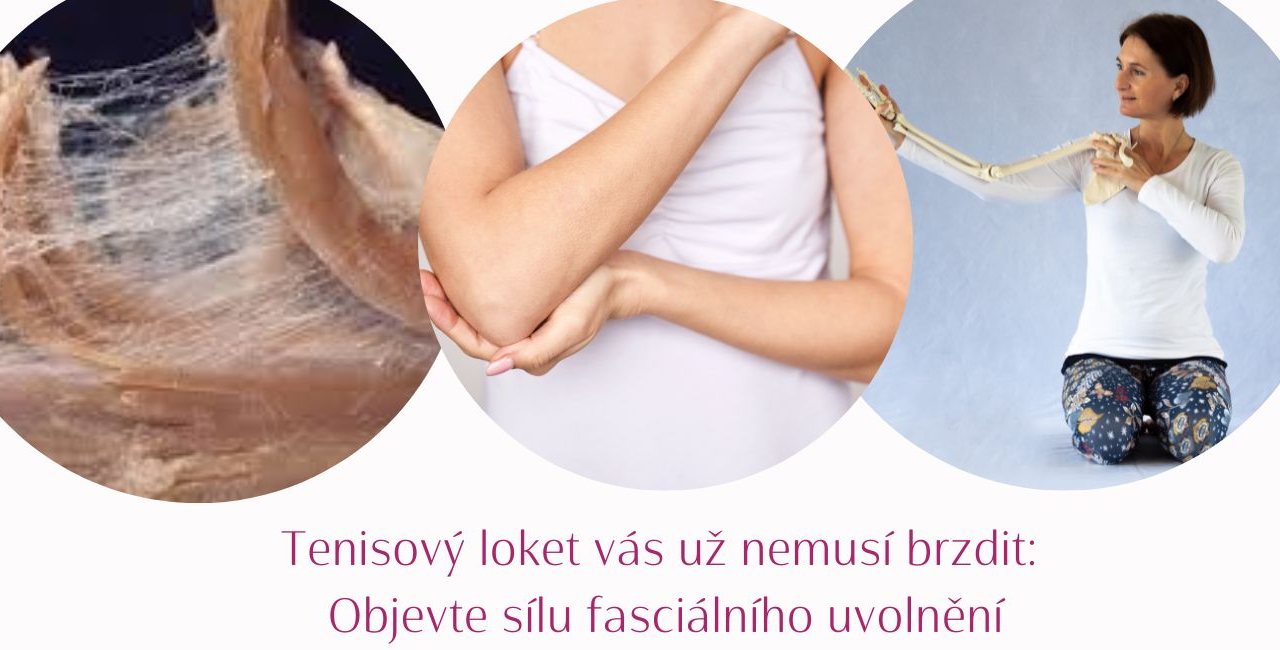
Tennis Elbow Doesn't Have to Bother You Anymore: A Fascial Approach to Lasting Pain Relief
Tennis elbow is a common problem that plagues not only athletes but also the general population. The pain on the outside of your elbow during everyday activities can make life incredibly difficult. Unfortunately, conventional treatments often fail to deliver long-term results because they don't address the true cause of the issue.
In this article, you'll learn how tennis elbow develops and what's really happening within your body's tissues. I'll show you effective techniques that will bring you pain relief and help prevent its return. You'll get a comprehensive guide to getting rid of tennis elbow once and for all.
What Is Tennis Elbow and How to Recognize It
Are you struggling with pain on the outer side of your elbow, especially during wrist and finger movements? If so, you might have tennis elbow, known professionally as lateral epicondylitis.
Despite its name, this condition isn't limited to tennis players. It develops from frequent overuse of the arm muscles.
Here’s how to recognize it:
- Pain and tenderness on the bony bump on the outside of your elbow joint.
- Pain that worsens with wrist and finger movements.
- Difficulty lifting and holding objects.
By addressing the problem early, you can avoid chronic pain and limited mobility.
The key is to understand what's really happening inside your tissues and focus on the cause, not just the symptoms.
The True Cause of Tennis Elbow
Do you think your elbow hurts because of overstrained tendons? That's only part of the story. In reality, the problem lies much deeper—in the fascia.
Fascia is the dense connective tissue that envelops and connects muscles, tendons, and organs throughout your body. Its health is crucial for the proper function of your musculoskeletal system.
Here's what happens with tennis elbow:
- Repetitive overuse leads to the stiffening and adhesion of the fascia.
- The layers of fascia stop gliding smoothly over each other and start pulling on the tendons.
- This creates an imbalance of tension—some structures become tight and constricted while others are constantly being pulled.
- Chronic inflammation develops, which can later lead to irreversible changes in the tendons.
The key to resolving tennis elbow is to release the tight fascia, not just in the arm but also in the armpit, shoulder blades, trapezius muscles, and chest.
Imagine fascia as layers of fabric. When they are supple and loose, they allow for smooth movement. But when they stiffen and stick together, the different layers of tissue begin to rub against each other, creating increased tension, pain, and restricted movement.
This is exactly what happens with tennis elbow. That's why simply stretching or taking pain medication can't provide lasting relief.
You need to get deeper and release the adhered layers of fascia. Only then can the tendons and muscles return to their proper, pain-free function.
Why Common Treatment Approaches Often Fail
Have you been to physical therapy or tried various stretching exercises, only for the pain to keep coming back? You're not alone. Many people share this experience.
The problem is that these approaches often focus only on superficial structures and fail to address the real cause of the pain—adhered fascia.
Limitations of Common Approaches:
- Stretching isn't enough to release the deep layers of tissue.
- Physical therapy often overlooks the importance of working with fascia.
- Medication only masks the pain without resolving its source.
For lasting results, you need to release the fascia using special techniques.
This is exactly what fascial therapy does. Using special self-massage and Rolfing techniques, it releases the deep layers of tissue, restoring their elasticity and glide. This eliminates the root cause of the problem.
When you combine fascial therapy with adjustments to your habits, you create the conditions for permanently healing your tennis elbow.
Fascial Release: The Key to Lasting Relief
Fascial therapy, such as Rolfing, is the key to releasing constricted tissues and restoring their proper function. It works with the deep layers of muscles and connective tissue.
Releasing the fascia leads to pain relief and improved mobility.
Fascial therapy should be the first choice when addressing chronic musculoskeletal pain. It's the only way to get to the true cause and eliminate it.
By regularly releasing your fascia, you create the right conditions for tissue regeneration and a return to full, painless movement. It's an investment in the long-term health of your body.
Fortunately, there are ways you can release your fascia yourself.
Self-massage is an excellent complement to therapy that can help you speed up the healing process and maintain your results.
Healthy, released fascia is the foundation for healthy, pain-free movement. By taking regular care of it, you give your body the most valuable gift.
Adjusting Your Movement Habits
Fascial release and exercise are crucial for treating tennis elbow, but for a lasting effect, you also need to change your movement habits. This is the only way to prevent the return of chronic overuse.
Bad habits that contribute to tennis elbow:
- Prolonged sitting with bent elbows (e.g., working on a computer).
- Unergonomic grip on tools and equipment.
- Sleeping with your arms bent.
- Excessive overuse of forearm muscles.
By changing your habits, you can prevent the problem from returning and support the health of your entire arm.
Even small changes in your daily routines can have a huge impact on the health of your musculoskeletal system. Simply find time for short breaks, change positions frequently, and don't be afraid to ask for ergonomic adjustments at your workplace.
Healthy movement habits are an investment in your long-term health and well-being. With a little conscious effort, you can create an environment that supports natural, pain-free movement.
A Comprehensive Approach for a Healthy Elbow
Tennis elbow is not an isolated problem. It's a signal that something is out of balance within the entire system of your hand, arm, and torso. To achieve lasting healing, you need to rebalance this system.
Areas that can contribute to elbow problems:
- Incorrect shoulder blade and shoulder positioning.
- Muscle imbalances in the chest and back.
- Overuse of the hand and forearm muscles.
Restoring overall body balance is the key to preventing future issues.
The body functions as an interconnected system. When one part is out of balance, it often manifests as pain or dysfunction in another part.
For optimal body function, you need to be aware of all its parts and work with them as an integrated whole. Sometimes, a seemingly unrelated exercise or therapy can have a surprisingly positive effect on your problems.
When people ask me where to find a solution, I refer them to the online course Restart Your Body, which is a truly comprehensive guide and manual. It includes self-massage techniques, stretching, strengthening, movement habits, and functional breathing.
For those who prefer text, I recommend the complete body manual included in the premium e-book bundle.
The body is a fascinating organism with an immense capacity for regeneration and adaptation. If you give it the care and attention it needs, it will reward you with a feeling of lightness, strength, and joy in movement.
Remember, the key to lasting pain relief is understanding the true causes and addressing the problem at its roots. Fascial release, targeted exercises, and adjusting your movement habits are the essential building blocks of success.
Keep in mind that your body is unique and deserves an individual approach. Listen to it, perceive its needs, and never stop looking for ways to support its natural healing process.
Your body is the most valuable thing you have. Take care of it with love and respect, and it will repay you many times over.
I wish you beautiful days full of movement and free of pain.
Martina
Tags
#fascia#tennis elbow