Heel & Achilles PainFasciaFunctional CoreGait TrainingHip HealthUncategorizedMovement EducationHealthy Movement
Plantar Fasciitis, Heel Spurs, and Achilles Pain: A Complete Guide
11. března 2025
7 min read
Updated 4. 6. 2026
MF
Martina Fallerová
Movement & Wellness Expert
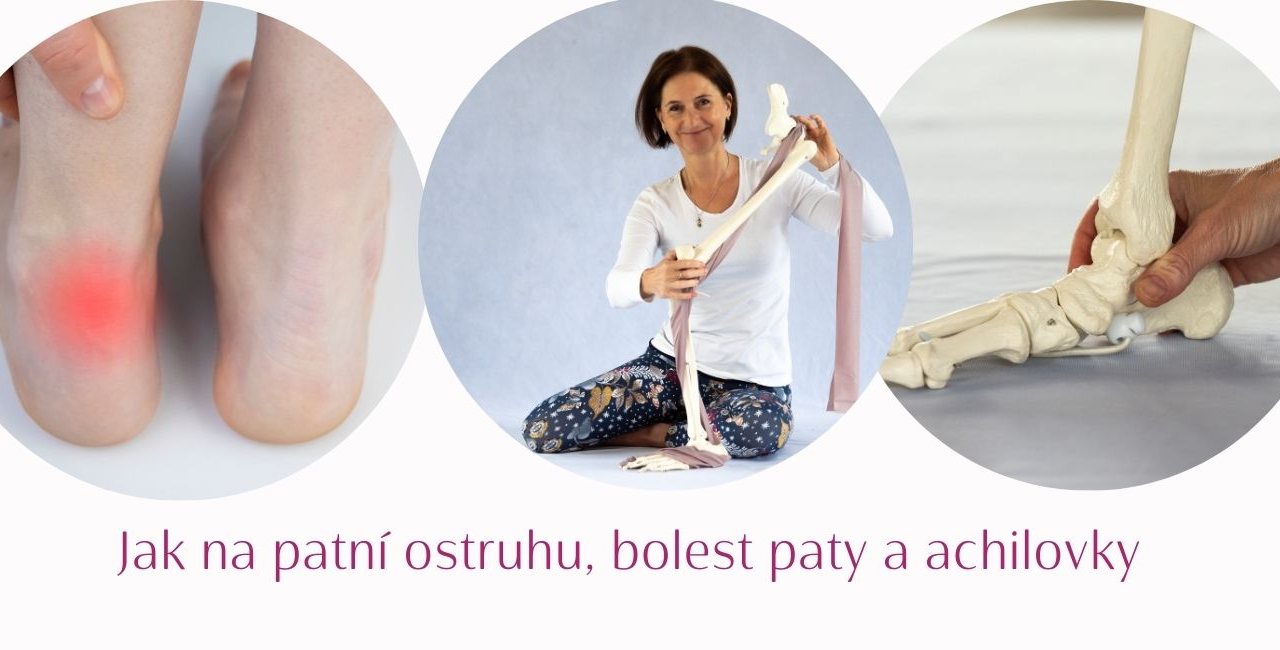
Does every step hurt, leaving you desperate for relief? Heel pain, Achilles tendonitis, or a heel spur can make life miserable, but you don’t have to accept it as your new normal. I’ve discovered what truly works, and I want to share the tips that have saved the feet of not just my husband but countless clients. It’s time to start walking and running again, completely pain-free.
What Are Plantar Fasciitis, Heel Spurs, and Achilles Tendonitis?
The core of the problem isn't just a bony growth on your heel; it's inflammation and overuse of the tissues around the sole of your foot, heel, and Achilles tendon.
Are you bothered by a growth on your heel bone and think it's the cause of your pain?
Let's clear up a common misconception. The heel spur itself is rarely the true culprit.
- A heel spur is the result of long-term overuse, not the cause of the pain.
- The pain arises from inflammation and "adhered" fascia and muscles that have lost their natural glide.
- The Achilles tendon and plantar fascia are interconnected—problems in one directly affect the other.
Once you understand these connections, you can start addressing the real cause of your plantar fasciitis, heel spur, or Achilles pain.
Imagine your pain is like steam rising from a pot. If you only focus on waving away the steam without turning down the fire underneath, you'll get nowhere. Similarly, just focusing on the heel spur while ignoring the root causes won't bring lasting relief.
The key to relief is a comprehensive view of your foot and your entire body. Everything is interconnected through the fascial network. I talk more about fascia and other crucial concepts in my free practical lecture available HERE.
What Causes Plantar Fasciitis, Heel Spurs, and Achilles Pain?
There are several contributing factors:
- Poor walking technique and inadequate shock absorption from a dysfunctional foot.
- Shortened muscles and fascia on the back of the lower leg (Achilles, calves, hamstrings). When these tissues lack elasticity, the pulling forces concentrate at their insertion point—the heel.
- Micro-trauma to the calf tendon and its progressive stiffening. When elasticity is missing, movement can create micro-tears. The body repairs these with collagen that is more rigid, causing the calf to become progressively tighter and overload the tendon insertions.
- Inflammation leading to the formation of a heel spur.
- Fallen arches, which also increase the pulling forces on the heel's insertion points.
- Improper footwear that creates friction around the heel, irritating the tissues.
- Tissue adhesion to the heel bone, which restricts the small, gliding movements that should naturally occur there.
Did you know that your heel pain could even be caused by improper alignment of your knee or hip? Imbalances and overloads anywhere in the kinetic chain travel down the line, and the heel and Achilles tendon are often at the end of that chain, taking the brunt of the force.
- Incorrect movement patterns and habits lead to chronic overuse.
- Fascial lines connect the heel to the calves, knees, hips, and even the back.
- A collapsed foot arch worsens the strain on the heel and Achilles tendon.
If you don't address the fascial lines, tissue elasticity, and movement habits, your heel spur, heel pain, and Achilles tendonitis will keep coming back.
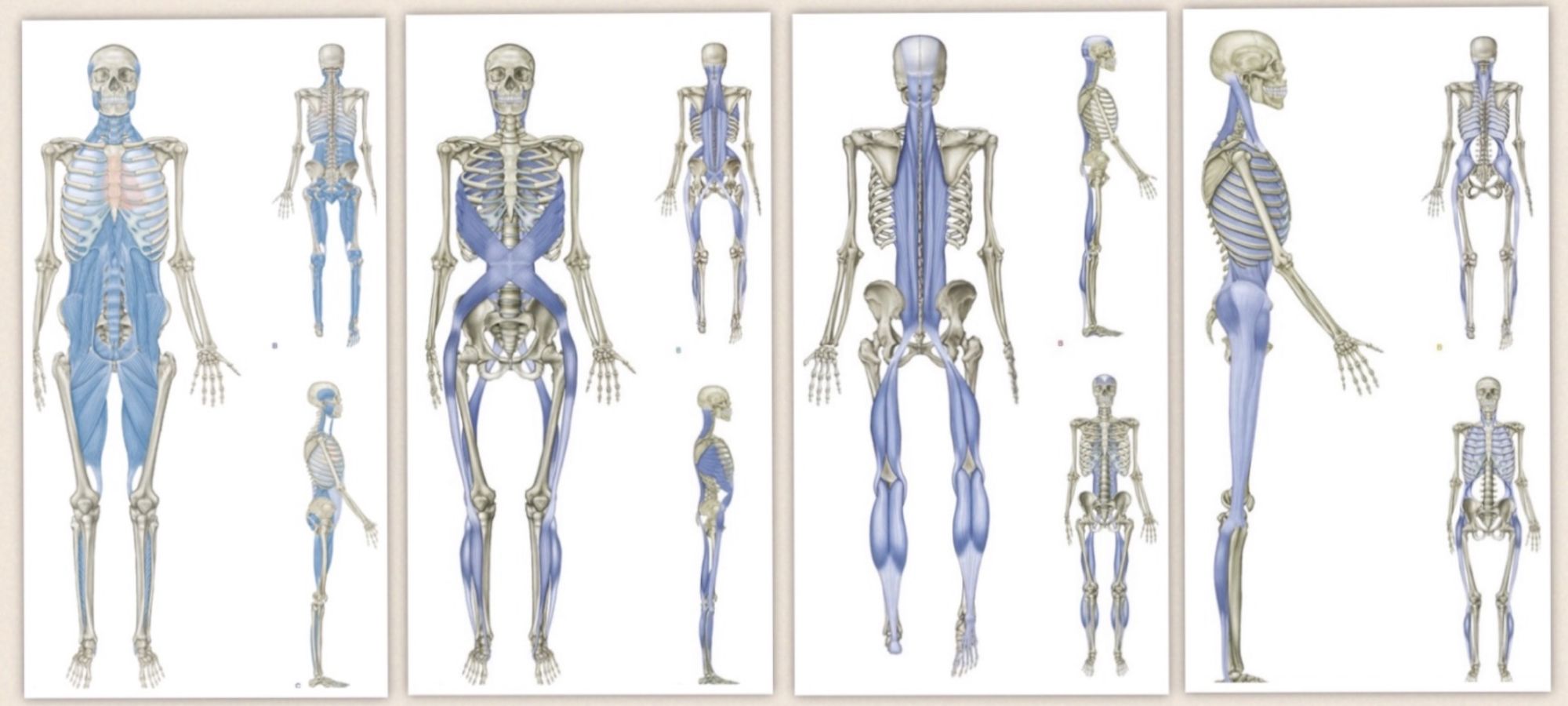
Heel pain is like a warning light in your car. It turns on when something is wrong. You can either ignore it or listen to it and find the underlying cause. The second option is the only path to a permanent solution. Once you identify and correct the real issues, the pain will disappear for good, without the need for symptom-masking medications.
It's not difficult if you know how to do it. I explain all these connections in my practical lecture, FROM PAIN TO JOY. In the lecture, you'll get a functional roadmap for a body that moves without pain. I'll also introduce you to my...
5-Step FASPO Movement System
My unique FASPO movement system is the result of 38 years of practice and combines the best of movement, physiotherapy, fascial, Rolfing, and breathing techniques.
But let's get back to your aching heel or Achilles.
Step 1: Diagnose the Root Cause
Perform these simple tests to find out where your pain is coming from:
- Test your ankle mobility. Does it feel restricted, especially in the Achilles?
- Press your fingers into the sole of your foot, your calf, and around your heel. Do you find any tender, painful spots?
- Take off your shoes and stand. Do you notice your arch collapsing? Is your heel bone straight or tilted?
- How deep is your forward bend? Do you feel a strong pull along the back of your legs?
- What is your gait like? Do you stomp or land heavily?
This will help you identify which areas need the most work.
Step 2: Hit Reset with Rolfing Self-Massage Techniques
Imagine your fascia is like crystallized honey that needs to be returned to a fluid state. The right Rolfing self-massage techniques using a foam roller, a spiky ball, and a tennis ball can do just that. Each tool reaches different depths of your muscles and fascia. The online course RESTART YOUR BODY will guide you through techniques to unravel the fascia throughout your entire body, providing a complete manual for physical well-being. For a dedicated focus on these techniques, check out the e-book How to Release, Hydrate, and Detoxify Muscles and Fascia with Foam Rollers, Spiky Balls, and Tennis Balls.
The right self-massage techniques can help you release tension, flush out toxins, and hydrate your muscles and fascia anywhere in your body. They can become a ritual of self-care.
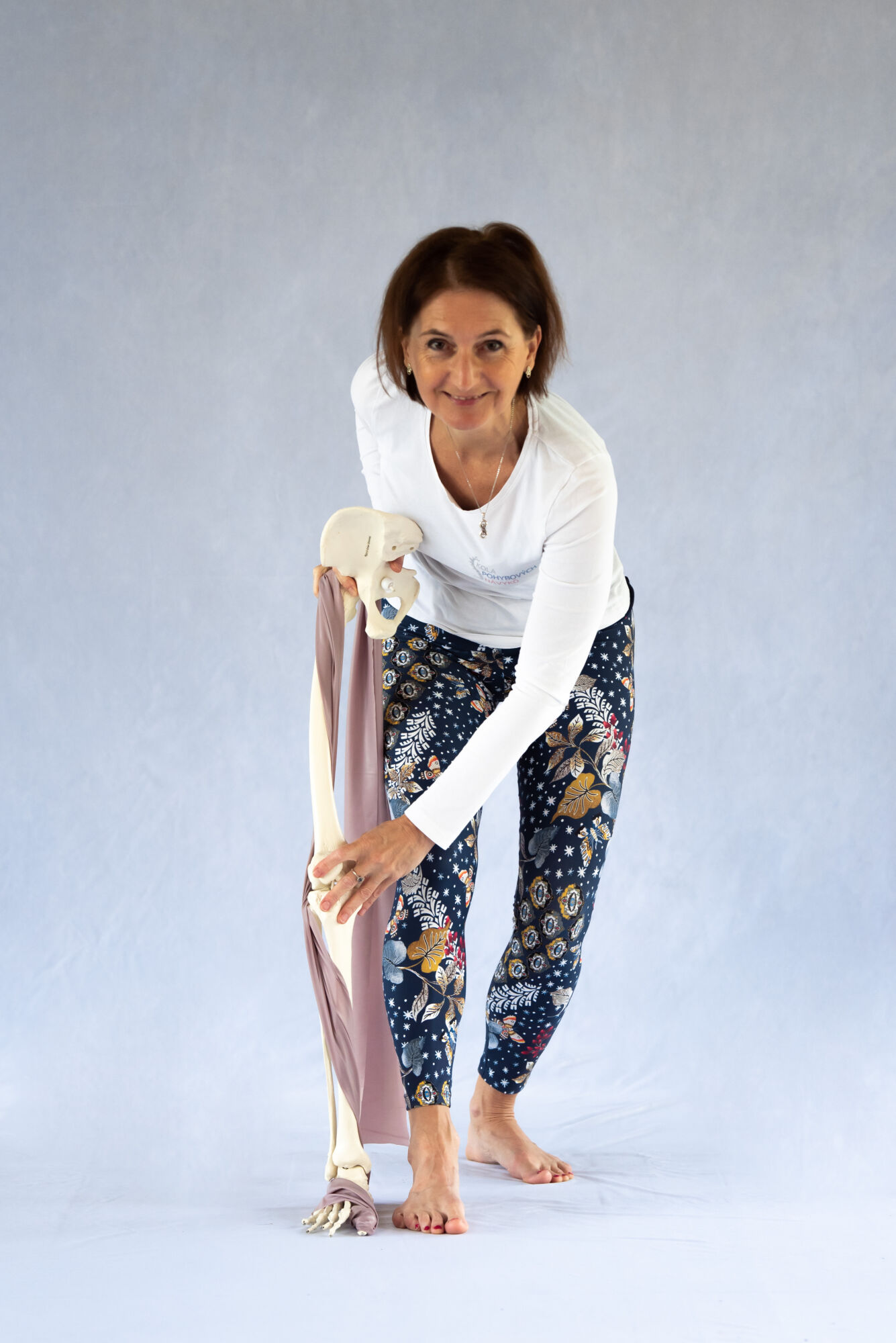
Step 3: Restore Tissue Elasticity with Functional Stretching
Once the fascia has been prepped in the previous step, it's time to restore its elasticity. If we were to start with stretching immediately, it wouldn't be effective. When stretching, our body will only lengthen the segments that are already flexible, not the areas with adhesions and stiffness in the muscles and fascia.
Step 4: Build Strength and Stability in Your Foot and Lower Leg
Strong feet are the foundation of pain-free walking.
- Restore the spiral rotation between your forefoot and heel.
- Work on strengthening your toes.
- Center all the joints in your lower limb.
- Teach your foot, knee, and hip to work together as a team.
Think of your foot as the roots of a tree—the stronger it is, the more stable you'll be.
Step 5: Rebuild Proper Movement Patterns
Your body is amazing in its ability to relearn movement habits that support it, turning movement into a healing process rather than a destructive one.
- Practice mindful walking, focusing on rolling through the foot from the outer heel to the big toe.
- Learn to activate your second and third toes during the push-off phase.
- Use your feet and knees as natural shock absorbers.
The Online School of Movement Habits is a manual for your body to move without pain. It's also part of the online course RESTART YOUR BODY.
I hope this article has given you hope and the motivation to start working on yourself.
Key Takeaways from This Article:
- Your body functions as an interconnected whole through the fascial system.
- The true cause of pain is often located somewhere other than where you feel it.
- Focus on the causes and gradually eliminate them; the symptoms will disappear on their own.
- Movement is medicine for pain, but it must happen in the right segment and be dosed correctly.
- Your body knows how to heal itself; give it the time and space to do so.
If you want to go even deeper, sign up for my online lecture "FROM PAIN TO JOY." Or get the online course "Restart Your Body" for a complete guide for your feet and your entire body.
<figure>
<iframe src="https://www.youtube.com/embed/VEsXQrPDbUY" width="560" height="315" frameborder="0" allowfullscreen="allowfullscreen"></iframe>
<figcaption>FASPO - 5 Steps to a Body in Motion Without Pain</figcaption>
</figure>Tags
#achilles tendon pain#heel pain#fascia#plantar fasciitis