Back PainMovement Education
Is Your Posture Sabotaging Your Health?
14. listopadu 2019
4 min read
Updated 4. 6. 2026
MF
Martina Fallerová
Movement & Wellness Expert
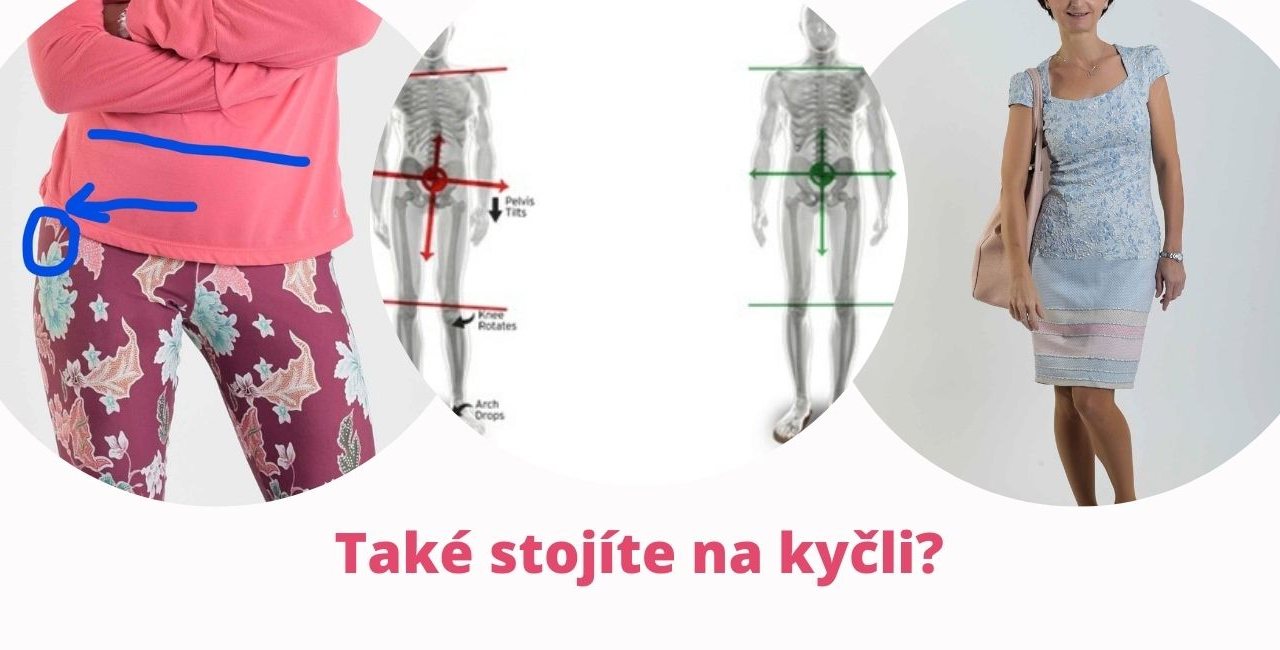

Through evolution, we transitioned from supporting ourselves on four limbs to standing on two "lower limbs." This freed up our other two "upper limbs," allowing us to use them to care for our bodies and perform work.
We stand and walk on two feet. Therefore, both lower limbs should be loaded equally to ensure an even transfer of force from the lower to the upper body.
But how are you sitting or standing right now?
Are you balanced on two feet? Or are you leaning more on one sit bone or slumping into one hip joint?
When You Stand on One Leg, Do You Lift Up or Collapse Into It?
If you lift up, your body must engage the muscles of the lower limb, the hip, and the core. Thanks to this active muscle engagement, the forces act upward, working against gravity. This allows us to stand and walk actively and in a way that is gentle on our bodies.
However, if we slump into the hip joint when we stand, the pelvis rests directly on the head of the femur! It's bone on bone. We haven't engaged our muscles; instead, we are relying solely on our ligaments, essentially hanging on them. This creates downward pressure in the hip joint as we surrender to gravity.
The Damage Goes Far Beyond Your Hip Joint
It's not just your hip that's in trouble—though you are setting yourself up for a nasty case of arthritis and a future spot on the hip replacement waiting list. This habit affects your entire body.
This collapse triggers a chain reaction. Your ankle and knee are compromised, your pelvis is knocked out of alignment, and your entire spine must contort itself to compensate for the imbalanced foundation. The result is that your whole spine is forced into a scoliotic shape.
The lower back and the lumbosacral (L/S) junction bear the most strain, which is where disc herniations most commonly occur. The lateral deviation continues up from the lumbar spine into the thoracic and cervical spine, ending at the joint where your head meets your neck.
The initial problem might not even manifest as hip pain. Usually, our body's weakest link is the first to cry out. You might experience:
- Ankle pain
- Knee problems
- SI joint pain
- A herniated disc
- Thoracic or cervical spine issues
- Headaches or shoulder pain
If you only treat the specific area that hurts while continuing to slump into your hip, you will remain stuck in a vicious cycle.


Think I'm exaggerating? Trust me, I'm not. Take one day to observe how you stand. Notice it when you're brushing your teeth, waiting for the bus, standing in line, or working in the kitchen. Look at the people around you, and you'll see that this is no exaggeration.
Calculate the time you spend in this state of collapse, hanging on your ligaments instead of using your muscles to actively fight gravity and create space in your body—space in your joints and between each vertebra.
I hope this has made you think a little more about your body. My goal isn't to scare you but to motivate you to change your approach. A pill, an injection, or a massage will only suppress the warning signals your body is sending. Try listening to it and doing something about it yourself.
Not sure how? Sign up for the 3-Day "Body in Motion" Mini-Course here >>>
I’m rooting for you and wish you strong resolve. The result is worth it.
<figure>
<figcaption>
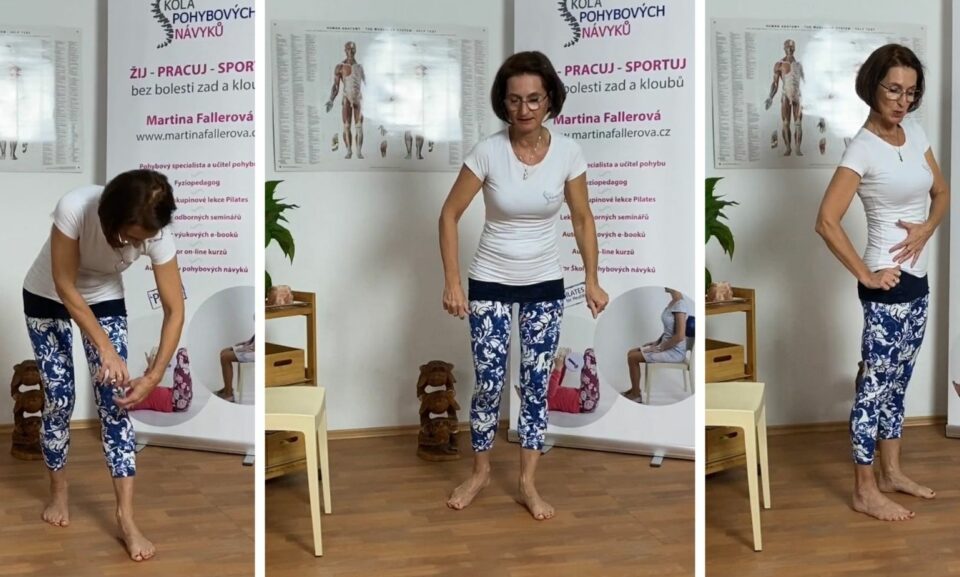
3-Day "Body in Motion" Mini-Course
</figcaption>
</figure>