10 Body Facts That Will Change How You Think About Pain Forever
11. února 2022
8 min read
Updated 4. 6. 2026
MF
Martina Fallerová
Movement & Wellness Expert

The Body as a Spiderweb: 10 Perspectives on How It Works
Change how you see your body and find relief from pain in your lower back, hips, wrists, shoulders, and knees. Discover what you've been taught wrong and how you can feel better than ever before.
We can't compartmentalize our body and focus on just one part, even if the problem bothering us is a specific knee, hip joint, pelvic floor, diastasis, shoulder, or neck. We must always address the body as a whole. Only then can we ensure problems don't return and that we are treating the root cause, not just the symptom. Our body isn't just a pile of bones and muscles; it's like a spiderweb, where every thread has its purpose and influences the entire structure.
We can view the body as a three-dimensional 3D spiderweb. If one part of the web is pulled, torn, or changed in length, it affects the tension and shape of the entire web. In this network, everything is connected to everything else, just like in our bodies.
1. Fascia
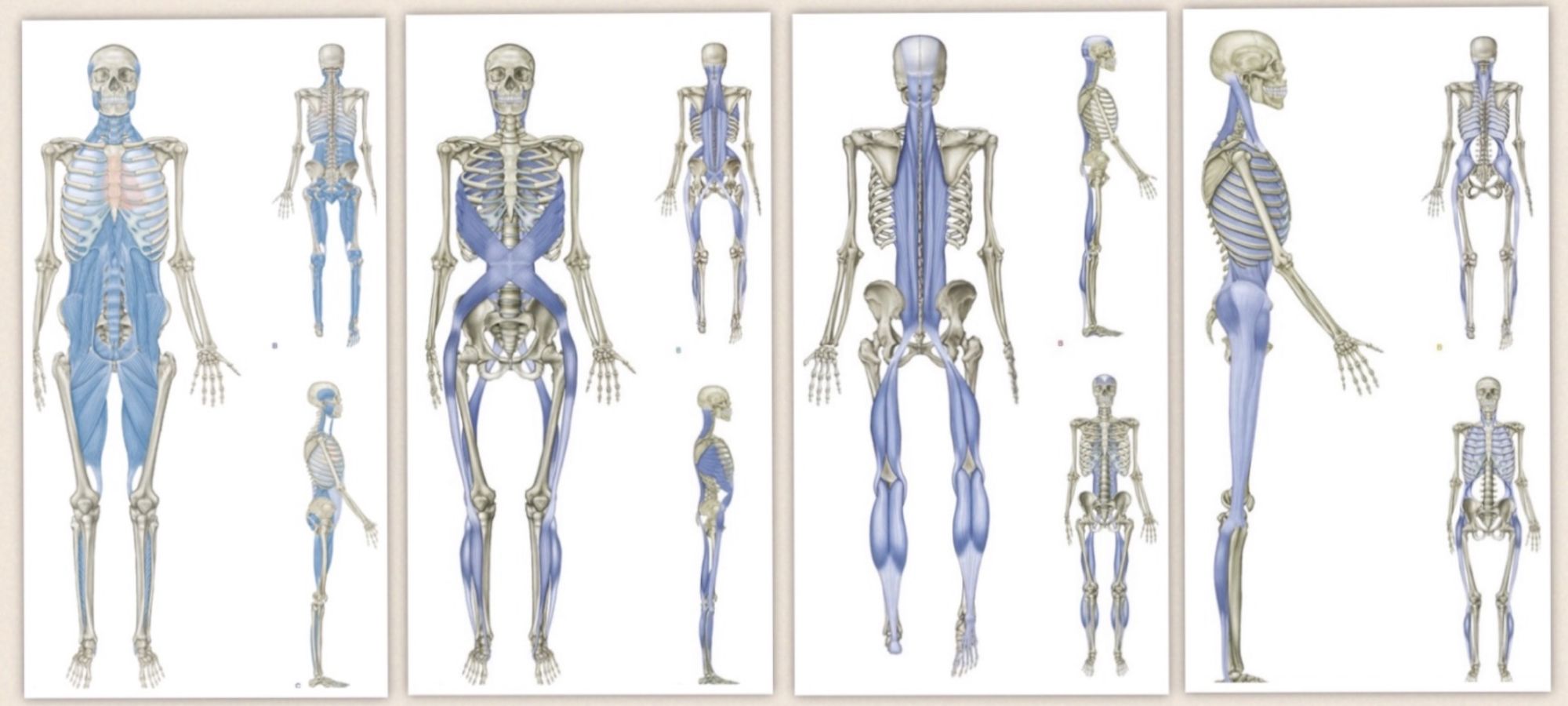
It all comes down to the fascial network, which separates but simultaneously connects and binds everything in the body. It also acts as a lubricant, ensuring everything glides smoothly so we can move freely with nothing holding us back. This network contains up to 80% of our nerve endings and is crucial for our body's stability. Without it, our body would be just a heap of bones and tissues. You can learn more about this tissue > HERE <.
That's why, when I need to solve any issue in the body, I can't just look at the painful area—I have to look at the entire system. The goal is to find the true root cause of the problem, which might be located somewhere else in the body entirely.
2. Tension vs. Pressure
Our body and its fascial network react and adapt to the external conditions they are subjected to throughout our lives—namely, pressures and tensions.
Pressure is the force of gravity, fatigue, or the effects of slumping while sitting or standing. We often collapse into our bodies, hanging on our structures, which creates compression = PRESSURE in our tissues and spine. When pressure is applied to one part of the spiderweb, the tissue compresses, shortens, mats together, and becomes stiff.
In contrast, other parts of the body may experience increased stretching, or TENSION. For example, a hunched-over spine is shortened on the front side (pressure) but stretched on the back side (tension). Our tissue adapts to these forces as well, reinforcing itself to protect us.
Over a lifetime of protecting the body, some areas become tight, others become overstretched, and certain layers may stick together due to a lack of movement or become scarred from injuries and surgeries. As a result, movement requires more effort, leading to overuse and strain.
The goal is to have balanced tension throughout the body. Fascia functions like the fabric of a tent; for the structure to be strong and stable, all the canvases must be evenly stretched. This is where the strength and stability of our body lie. Even the muscular system relies on fascia to maintain the stability and function of the joints. Muscles are the engine of the joint, but the coordination of movement depends on the functionality of the fascia.
Take a moment to notice: Where in your body do you feel PRESSURE, and where do you feel TENSION?
3. Elasticity
Everyday movements like walking and running should be elastic and springy. If muscles and tissues are stiff, stuck, and unyielding, movement costs us an unnecessary amount of energy, and we end up engaging muscle groups that should be resting.
On the other hand, some people have a greater range of motion—they are hypermobile—and they face the opposite problem. They also lack elasticity, which leads to overstretching and instability, putting their joints at greater risk. They lack strength and stability. It's like a trampoline: for a good bounce, you need just the right amount of spring. If it's too stiff, you won't get any height. If it's too loose, you'll sink in, the impact force will be absorbed, and you won't jump very high either.
How does your body move? With the grace of a cat or a gazelle, or with the stiffness of a golem?
4. Movement
Our body is made to move. Movement is life. It gets the blood and lymph flowing, allowing nutrients to reach where they're needed and waste products to be carried away.
The fascial network is also capable of converting mechanical energy into electrical energy. Movement literally charges us.
However, with age and life experiences like injuries or repetitive work and sports patterns, our movements gradually change. We often don't notice that our habits are actually harming our joints. We might not be moving from the segment designed for that specific action but are compensating elsewhere. Our body can handle this for a while, but it's only a matter of time before its patience runs out.
Because I found myself constantly repeating the same information on how to move in harmony with our anatomy, I founded the School of Movement Habits. Now, anyone interested in their body can join. It’s available to everyone for free >HERE<.

5. Relationships and Stress
The quality of our relationships also affects our body and fascia—our relationship with ourselves, our partner, our family, and our colleagues. When we live with tension and stress, our fascial network responds by tightening.
If something is bothering us, our thoughts often turn negative over time. This also influences the tension in our tissues. Conversely, if I work on positive thinking, I can also affect that tension. By using massage or self-massage, I can release tension in the body, which in turn helps calm my mind. The two influence each other.
6. Internal Organs
Our internal organs are also enveloped and suspended within the fascial network. If we have tension in our fascial and muscular systems, it will also affect the internal organs. The reverse is also true: if we suffer from poor digestion or elimination, it will impact the surrounding fascia and muscle tissue.
7. Diet
And believe it or not, our diet also influences how we feel. We all know this, but it’s an aspect we often ignore.
Excess sugar in the bloodstream spontaneously reacts with proteins, creating free radicals. These are responsible for forming non-specific cross-links in collagen, which leads to the stiffening and reduced elasticity of tendons and fascia. The stiffer the connective tissues, the greater the risk of micro-trauma during dynamic movement. These micro-traumas are repaired with a different type of collagen that is less elastic and more rigid. And so, we find ourselves in a vicious cycle.
If our diet consists of fried foods, processed meats, alcohol, and sugars, we shouldn't be surprised. It's also important to remember that as we get older, our bodies are more prone to inflammation. Learn more about diet and fascia >here<.
8. Pain
Pain is not here to torment us, but to signal that we are doing something wrong—something that isn't aligned with the body's 3D anatomy.
It's crucial to always ask yourself: Why did this start to hurt? Did I make a sudden movement? Did I overdo it with physical load at work or during sports? The key is to find and eliminate the cause. If I ignore the pain and just take a painkiller, the body begins to compensate by avoiding the pain, creating alternative movement patterns, and trapping us in a vicious cycle. Before long, pain will show up somewhere else.
It's truly up to us whether we want to merely SURVIVE our lives or truly THRIVE in them. After all, we all want to live a high-quality life, even in our later years.
9. Clothing
Could my clothing be the reason my back hurts? Yes. Tight pants, or a skirt with a belt, absolutely. When you sit down in tight pants, your pelvis can't rotate freely around the head of the femur. This movement is then compensated for in the lumbar spine, which in turn affects the thoracic and cervical spine, and even the head. Add a tight belt to the mix, and the damage is done. And think about how long the straps of a bra put pressure on the trapezius muscles. I've covered this topic in more detail >here<.

10. Sleep
Sleep is the only time our body has to regenerate, repair, and rest. That's why skimping on sleep is never worth it.
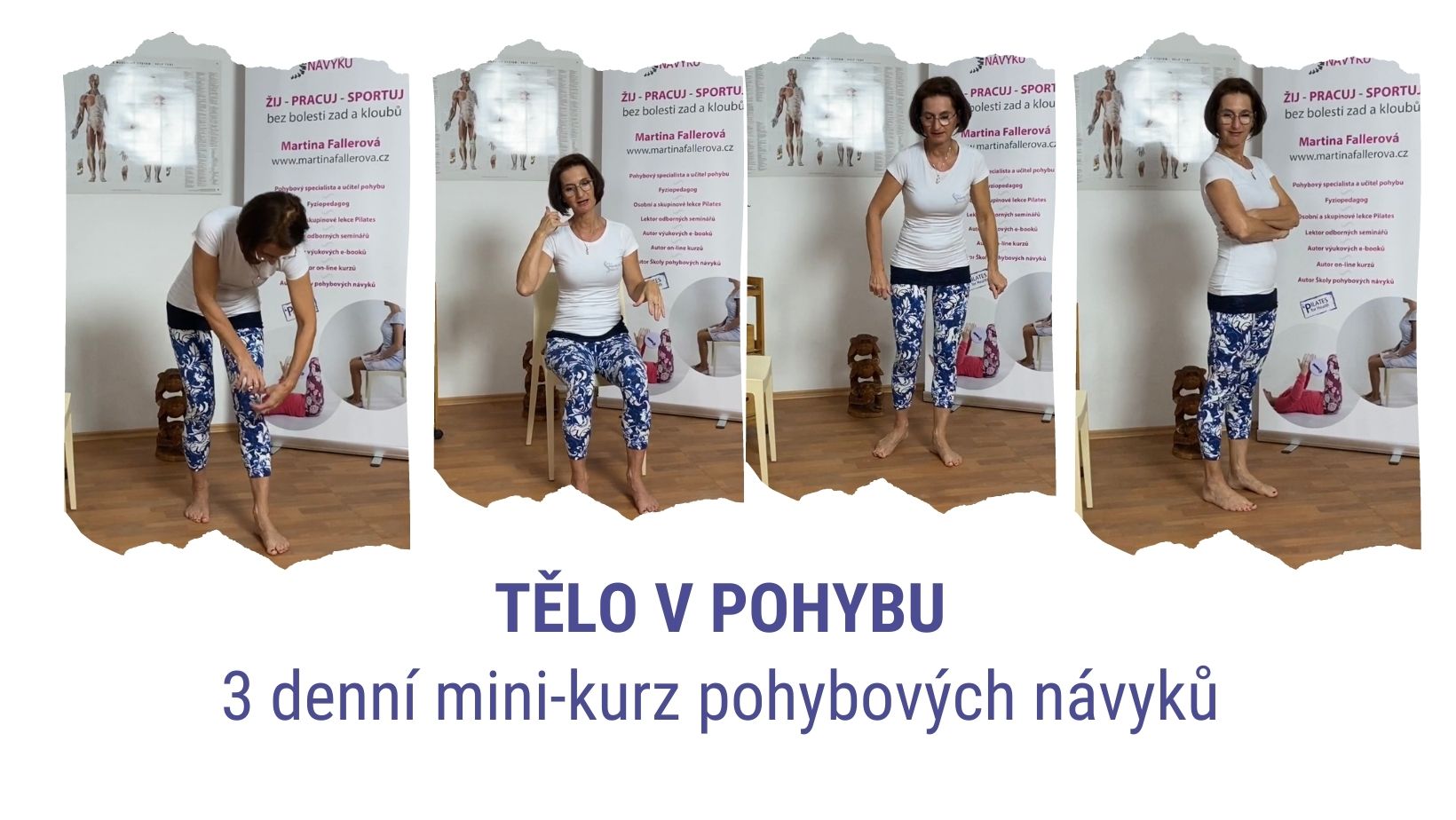
I have some great news to end with. Cell division in the body is a constant process. Over about seven years, every cell in your body is replaced, except for nerve cells. How we treat our bodies truly matters, and it's never too late to start making a change. I recommend starting with the mini-course Body in Motion >here<.
<figure>
<figcaption>
</figcaption>
</figure>